
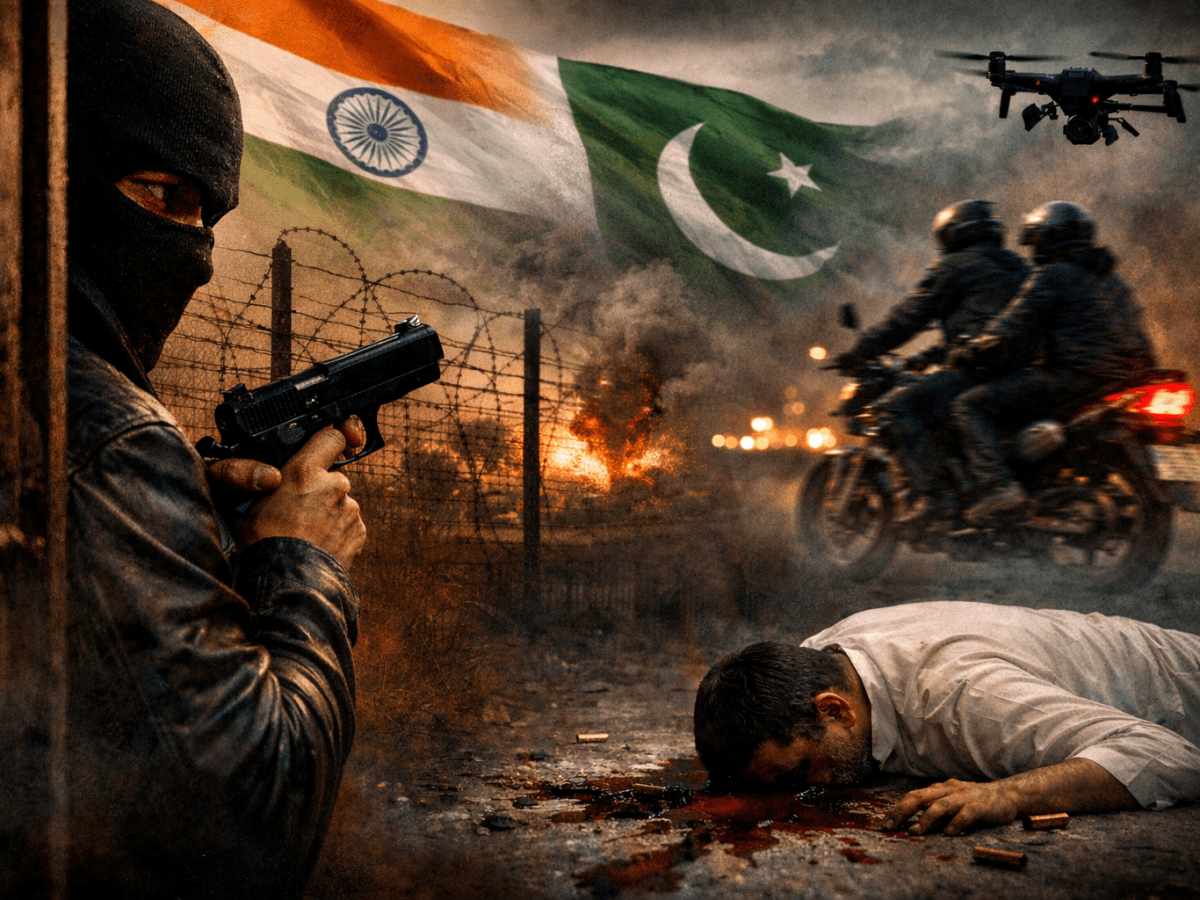
On April 22, 2025, the serene valley of Pahalgam, a haven for tourists seeking India’s natural splendor, turned into a slaughterhouse. Terrorists, cloaked in hatred, stormed the town, demanding to know the religion of their victims before unleashing bullets on non-Muslims. Twenty-six lives—families, dreamers, travelers—were snuffed out in a grotesque act of violence. Two weeks later, on May 7, India responded with Operation Sindoor, a surgical strike targeting nine terrorist hideouts in Pakistan and PoK. The world watched, and some dared to call it “tit-for-tat,” an “eye for an eye.” But let me ask you: when terrorists murder innocents based on faith, and India strikes their lairs to prevent more bloodshed, how is that revenge? This isn’t a petty feud—it’s a fight for survival against a terror factory next door.
Not Tit-for-Tat: A Stand Against Barbarism
Let’s be clear: Operation Sindoor was not India throwing a tantrum. It was a calculated, precise assault on the nerve centers of terror—Jaish-e-Mohammed’s Markaz Subhan Allah in Bahawalpur, Lashkar-e-Taiba’s Markaz Taiba in Muridke, and other camps festering in PoK. These weren’t random targets; they were the breeding grounds of the ideology that fueled the Pahalgam massacre. Terrorists didn’t just attack tourists—they weaponized religion, turning a place of peace into a graveyard. India’s response, using SCALP missiles, HAMMER bombs, and indigenous loitering munitions, aimed to dismantle the infrastructure of hate, not to settle a score.
Must Read: The only way to get rid of terrorism!!!
Yet, international media and some politicians lazily label this “tit-for-tat.” Are they blind to the reality of terrorism, or do they simply not care until it knocks on their door? The Pahalgam attackers didn’t target soldiers or politicians—they hunted civilians, asking their faith before firing. This wasn’t a military skirmish; it was an assault on humanity. Calling India’s response “revenge” trivializes the pain of those 26 families and ignores the existential threat posed by groups like LeT and JeM, which have bled India for decades. If you think this is “eye for an eye,” you either don’t understand terrorism or you’re waiting for your own 9/11 to wake up.
Pakistan’s Retaliation: Defending Terrorists, Not Sovereignty
Pakistan’s response—vowing retaliation and scrambling its air force—begs the question: what are they retaliating for? India didn’t strike Pakistani civilians or military bases; it targeted terrorist camps, some 400 km deep in Pakistan, with surgical precision to avoid collateral damage.web:0,4,8,19 Pakistan’s outrage isn’t about sovereignty—it’s about protecting its dirty secret: a state-sponsored terror ecosystem. Former Prime Minister Imran Khan admitted at the UN General Assembly that Pakistan trained Al-Qaeda and other terror outfits. Defence Minister Khawaja Asif recently confessed to three decades of nurturing terrorists. These aren’t conspiracy theories; they’re statements from Pakistan’s own leaders.
Must Read: Imran Khan, Khyber Pakhtunkhwa, the establishment and the downfall of Pakistan!
Pakistan’s history is littered with complicity. From harboring Osama bin Laden in Abbottabad to shielding LeT chief Hafiz Saeed, the country’s authorities have been caught red-handed, hands clasped with the world’s most wanted. India has screamed this truth for decades, warning the world that there’s no such thing as a “good terrorist.” The US learned this the hard way after 9/11, when the “good Taliban” they once backed turned into a global nightmare. It took thousands of deaths for the world to see what India knew all along: terrorism doesn’t discriminate, and Pakistan is its factory. So, when Pakistan cries “retaliation,” they’re not defending their people—they’re shielding the monsters they’ve bred.
India’s Burden: Living Next to a Terror Factory
Imagine waking up every day knowing your neighbor is a ticking bomb. India shares a 3,323-km border with Pakistan, a nation that has exported terror to Indian soil for decades—be it the 1993 Mumbai bombings, the 2001 Parliament attack, or the 2008 Mumbai siege. We can’t move our borders, but we have a right to live without fear. No Indian should dread boarding a train, sitting in a café, or visiting a temple, wondering if they’ll be asked their religion before a bullet ends their life. The Pahalgam attack wasn’t just a tragedy; it was a reminder that India’s patience is not infinite.
Must Read: The very old Pakistan where terrorism is a constant; nothing changes!
What should India do? Operation Sindoor, with its Rafale jets, BrahMos missiles, and pinpoint strikes, is the bare minimum. These operations show India’s resolve: we will hit you where it hurts, but we won’t stoop to your level. Unlike terrorists, India doesn’t target civilians. Unlike Pakistan, India doesn’t harbor killers. But waiting for another 26 deaths is not the answer. India must shift to pre-emptive strikes, dismantling terror camps before they strike. Intelligence-driven operations, bolstered by drones like Nagastra-1 and global cooperation, can stop attacks before they happen. The world may clutch its pearls, but India’s priority is its people, not its critics.
“First Time Tourists Were Targeted”? Think Again
Some argue Pahalgam was unique because “tourists were targeted for the first time.” That’s not just wrong—it’s insulting. Cast your mind back to November 26, 2008, when Mumbai burned. The iconic Taj Mahal Palace Hotel, a beacon for international travelers, became a killing field. Lashkar-e-Taiba terrorists stormed the hotel, targeting foreigners and Indians alike, checking passports to single out Americans, Brits, and Israelis. Of the 166 killed, many were tourists—people who came to experience India’s vibrancy, only to leave in coffins. The 2008 attack wasn’t an anomaly; it was a blueprint for Pahalgam, a reminder that terrorists don’t spare anyone, not locals, not visitors.
To claim Pahalgam was the “first” tourist attack is to erase the blood-soaked pages of India’s history. From the 2006 Mumbai train bombings to the 2011 Delhi blasts, civilians—tourists included—have been fodder for Pakistan-backed terror. Dismissing this pattern as “new” fuels ignorance and emboldens the perpetrators. India’s fight isn’t just for its citizens; it’s for every soul who steps onto its soil, expecting safety, not slaughter.
A Plea to the World
Operation Sindoor wasn’t revenge—it was a desperate plea for survival. India didn’t choose this war; it was thrust upon us by a neighbor that thrives on chaos. We don’t want applause; we want the world to stop romanticizing “good terrorists” and start holding Pakistan accountable. Every SCALP missile, every HAMMER bomb, every drone strike was a message: India will not cower. But strikes alone aren’t enough. The world must pressure Pakistan to dismantle its terror factories, not just condemn attacks after the fact. Until then, India will do what it must—pre-emptively, precisely, relentlessly—to protect its people.
As I write this, I think of the 26 lives lost in Pahalgam. Their faces haunt me—not just as numbers, but as dreams extinguished, families shattered. They could have been you or me. India’s fight is not just ours; it’s a warning to the world. Ignore terrorism at your peril, because it doesn’t stop at borders. Today, it’s Pahalgam. Tomorrow, it could be your home.
Thank you reading. Please help me spread the word!
Also read:











 Infinite Sea of Opportunities
Leave a comment