
Thamma (2025), the new Bollywood horror-comedy starring Ayushmann Khurrana and Rashmika Mandanna, sparkles with slick visuals and a high-energy vibe. Directed by Aditya Sarpotdar, it’s a wild mix of Betaals (vampire-like creatures), werewolf-like beasts, and forbidden love, set in the Maddock Horror Comedy Universe. But for anyone who’s watched The Vampire Diaries, Twilight, or The Originals, it’s like watching a rerun. Having seen these Western shows, I could easily predicted every major scene in Thamma—proof it’s not a fresh story, just a repackaged one. In a nation of over 1.4 billion with a rich storytelling heritage, it’s disheartening that Bollywood keeps recycling Hollywood ideas instead of crafting its own.
The plot follows Alok (Khurrana), a journalist attacked in a jungle, who becomes a Betaal hybrid and falls for Tadaka (Mandanna), a full-fledged supernatural being. The Thamma (Nawazuddin Siddiqui) rules the Betaal sect, much like the Mikaelson family in The Originals, who sire all vampires and punish rebels by locking them away for centuries. Yakshasan, the Betaal leader, is a direct parallel to the Mikaelsons—he created all Betaals, can kill them with a thought, and, like his Western counterparts, faces rare weapons that can challenge his power. Trapped in a cursed cave (or buried in the garden as in the Originals), his imprisonment mirrors the Mikaelsons’ daggered slumbers in coffins or sealed basements. Even the inspector, played by Faisal Malik, is lifted from The Originals’ priest, both tasked with balancing the supernatural and human worlds, keeping peace through secret pacts. Their dialogues are the same.
Yakshasan from Thamma:
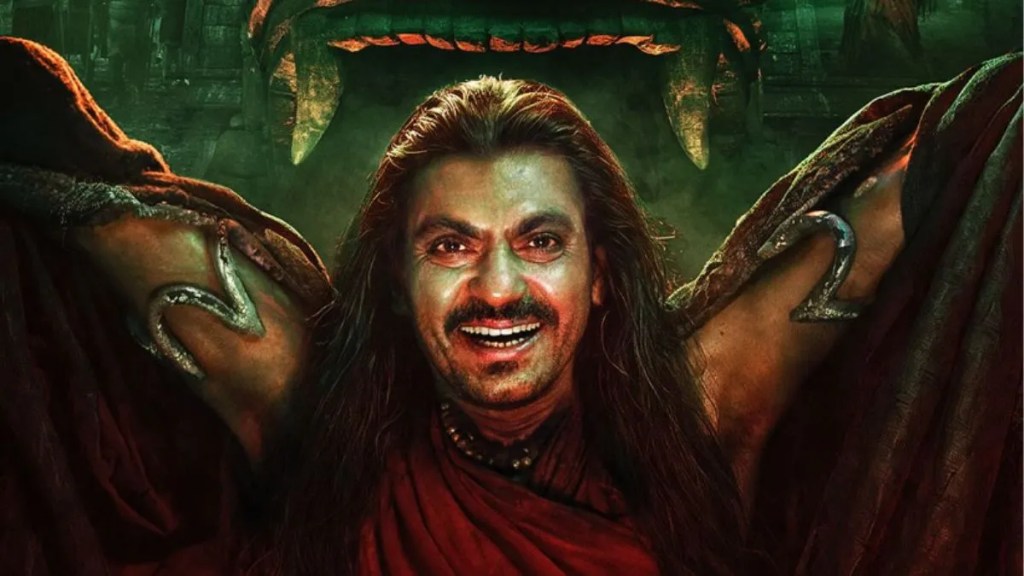
Klaus Michaelson from the Originals:

Alok’s transformation and the human-supernatural romance? They echo Twilight and The Vampire Diaries beat for beat. The music, with dramatic swells during chases, and dialogues about forbidden bloodlust and eternal curses? I could’ve mouthed them, having seen them in The Originals. As a fan, I guessed every twist—Alok’s struggle with his new powers, Tadaka’s sacrifice, the betrayals—because they followed the same playbook. This predictability dulled the thrill, proving Thamma’s core is borrowed, not built.
Some argue it’s “inspiration,” not copying. But when I could call every major plot point, the story’s not new—it’s just wrapped in Indian packaging. Bollywood sprinkles in local flavor, like Betaal myths or nods to Partition and Alexander the Great in 323 BC, but these are flimsy props. The Betaals, rooted in Vikram-Betaal tales where a cunning spirit tests a king’s morals, could’ve been complex anti-heroes. Instead, they’re generic vampires chanting “Hum sansaar ki raksha karte hain” (“We protect the world”)—a cool tagline used in their greeting ritual (“Betaal?” “Betaal!”) but lacking depth. The Partition and historical backstories sound intriguing but add nothing; strip them out, and the movie’s unchanged. They’re just window dressing to look Indian, not feel Indian. Imagine if Yakshasan’s curse tied to Partition’s trauma or Betaal lore explored moral dilemmas—Thamma could’ve stood out.
This isn’t just Thamma’s problem. Bollywood’s been borrowing for decades. Sholay (1975) riffed on The Magnificent Seven, blending Westerns with curry. Ghajini (2008) mimicked Memento’s amnesia-driven plot. Kaante (2002) was Reservoir Dogs in disguise. Even Aamir Khan, self-proclaimed “Mr. Perfectionist,” produced Laapataa Ladies (2024), lifting a foreign film and swapping burqa-clad women for Hindu women in ghoonghats, poking fun at Hindus while sparing Muslims, as seen in PK (2014). It’s copying with an agenda. From stories to songs, Bollywood recycles with just enough tweaks to dodge the “copy” label, leaving audiences with familiar but hollow tales.
Why lean on Western templates when India’s bursting with myths—chudails, nagas, haunted forests? Films like Stree (2018) and Tumbbad (2018) wove local ghosts and gods into spine-chilling stories that wowed the world. Kantara (2022) blended Karnataka folklore with raw emotion, while Bulbbul (2020) turned a chudail into a feminist icon. These films prove we can create unique tales without mimicking Hollywood. Yet, Bollywood plays it safe, chasing global trends for box-office wins. Producers bank on proven formulas, writers copy streaming hits, and audiences, used to the familiar, keep the cycle going.
Here’s the bright side: India’s talent is unstoppable. Thamma’s VFX—Betaal transformations, jungle attacks—are jaw-dropping, rivaling Hollywood’s best. This isn’t Bollywood’s self-proclaimed “artists”; it’s India’s tech wizards shining. Studios like Red Chillies VFX, behind Jawan, and DNEG, working on global blockbusters, show our engineering is world-class. Pair this with stories from our own backyard—rakshasas, haunted forts, village spirits—and Bollywood could lead, not follow. We don’t need Hollywood’s scraps. With our myths, passion, and tech, we can craft a horror-comedy universe the world will want to copy. Let’s stop predicting scenes and start telling stories that surprise everyone. Share your favorite Indian myth—let’s inspire Bollywood to write its own saga!
If you want to know what happens in the sequel have a look at the Originals. There are five seasons and you will find Thamma in between.
Thanks for reading!
Also read:
- Mandala Murders: A Portal to Elsewhere, Where Imagination Reigns
- The Kashmir Files – Part 2; why you should not watch it!
- Interesting “Tandav” challenges the conventional entertainment in India
- Avrodh: the web-series that looks more realistic and closer to the truth!
- The Sacred Games we were always a part of









 Infinite Sea of Opportunities
Leave a comment