
The hysterical backlash against Dhurandhar has nothing to do with “politics” or even “Pakistan-bashing.” It’s a full-blown cultural trauma for a particular generation of commentators—the ones personified by the classic ‘Arfa Khanum’ archetype.
She’s not critiquing a movie. She’s mourning. Mourning the sudden, violent death of the comforting moral universe that Bollywood spent decades constructing, brick by sanitized brick. Aditya Dhar didn’t direct a spy thriller—he committed narrative sacrilege by refusing to follow the old rules.
And the outrage? It’s as predictable as it is revealing.
🕌 From Noble Rehman Chacha to Skull-Crushing Dakait: The End of the Untouchable Muslim Archetype
For years, Bollywood operated on a rigid, unspoken moral code. Hindu characters—particularly upper-caste ones—were fair game for villainy, hypocrisy, or ridicule.
The villain was often the tilak-wearing Brahmin spouting Sanskrit while orchestrating evil: think the sadistic colonial collaborator in Shamshera (2022), or the fictional Pandit portrayed as a lyncher in Satyameva Jayate (2018). Even “Progressive” satire was one-directional: Aamir Khan’s PK (2014) gleefully dismantled Hindu godmen because that was deemed enlightened rationality. In Shah Rukh Khan’s Main Hoon Na (2004), the greatest threat to Indian peace is explicitly shown to be an ex-Indian Army officer (Sunil Shetty’s Raghavan)—a Hindu figure threatening national unity and peace with Pakistan.
But the Muslim character? Sacred. Always the poetic, long-suffering saint.
The benevolent Rehman Chacha who sacrificed everything without complaint was a moral constant: recall Dilip Kumar in Naya Daur (1957), the noble tonga driver, or Amitabh Bachchan’s iconic “Chacha” roles in Coolie (1983), the epitome of loyalty. When Shah Rukh Khan played the lead Muslim protagonist, films like My Name Is Khan (2010) turned into exhausting loyalty tests—Rizwan Khan repeating “I’m not a terrorist,” proving patriotism in ways no Hindu hero is ever asked to, like a perpetual audition for national belonging.
In Aamir Khan’s Fanaa (2006), the protagonist (Rehan) is revealed to be a terrorist, but his villainy is carefully softened and humanized by depicting him primarily as a heartbroken lover. This narrative complexity allows the film to contain a ‘Bad Muslim’ while maintaining the code, as his final execution is carried out by the hyper-patriotic ‘Good Muslim’ protagonist (Zooni, played by Kajol), providing the necessary self-correction and loyalty proof.
Enter Dhurandhar.
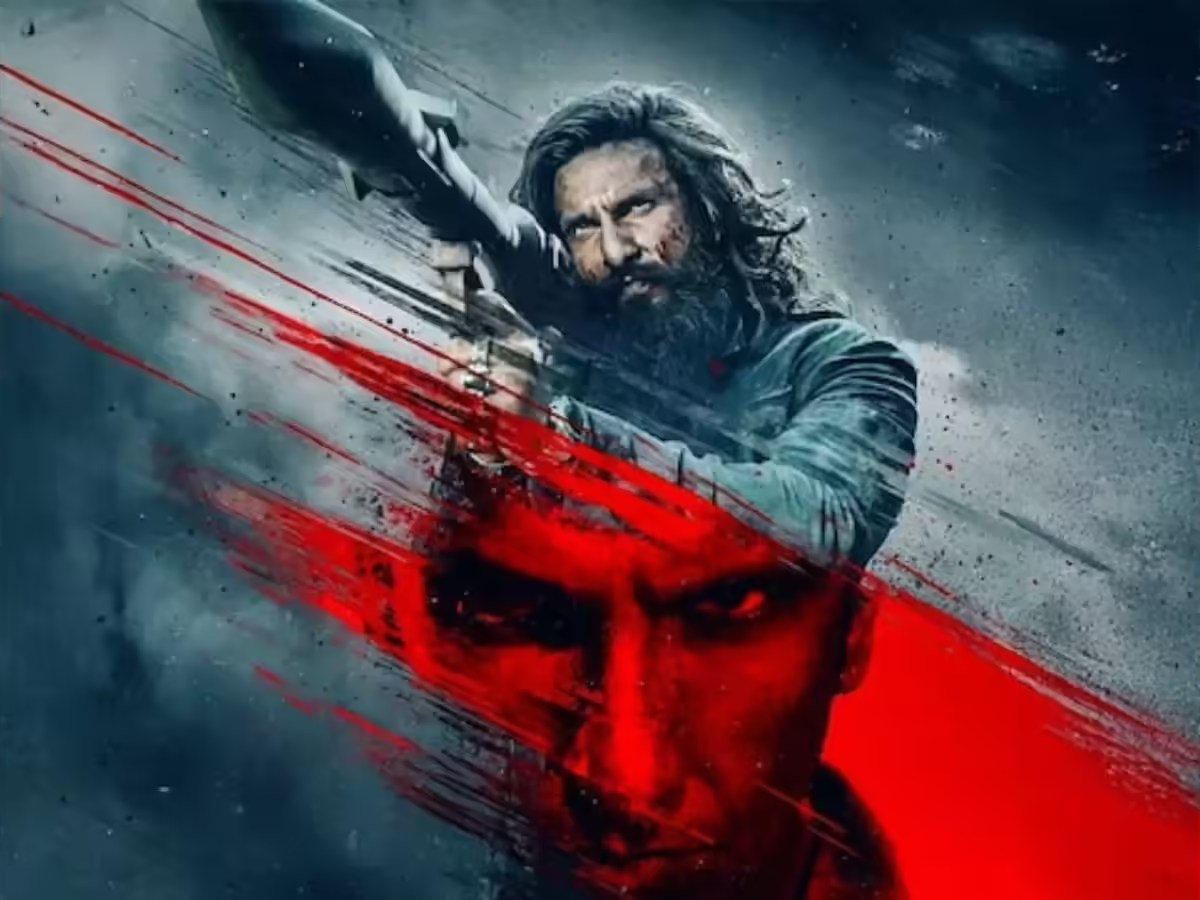
Suddenly, a “Rehman” is a ruthless gangster in Lyari, smashing faces with iron weights amid blood-splattered gym equipment, his eyes cold as he orchestrates extortion. Karachi’s underworld is a cesspool of betrayal, extortion, and ISI-fueled arms trafficking.
No qawwali redemption. No tearful reunion at Wagah. Just raw, documented truth: characters inspired by real criminals like Rehman Dakait (notorious for drugs and kidnappings), Uzair Baloch (his successor, confessing to ties with Iranian and Indian intel), and Arshad Pappu (a rival gangster who is plotting against Rehman).
The eternal Muslim saint is dead. Replaced by complex, brutal humans. And for those raised on Bollywood’s sanitized version, this feels like a profound cultural and ideological betrayal.
🇵🇰 Pakistan Was Never Meant to Look This Ugly
Arfa grew up believing organized brutality and gang rule only plague Hindu-majority India. Mirzapur’s blood-soaked turf wars? Legitimate critique of Indian society—complete with savage characters like “Guddu Pandit,” exposing Uttar Pradesh’s underbelly. Sacred Games‘ fictional lynchings and corrupt godman perversions? Essential exposure of our flaws.
But rocket launchers in Karachi streets? Decades-long gang wars paralyzing Lyari, where snipers pick off civilians? Political patronage of criminals, with PPP leaders allegedly shielding gangsters like Uzair Baloch? Impossible. That can’t happen in the “Land of the Pure.”
The film’s greatest offense? It demolishes the myth that Pakistan is the pure, peaceful neighbor of Bollywood fantasy. Cross-border stories took this fantasy to poetic extremes. Veer-Zaara (2004) gave us a dreamy Pakistan: soulful qawwalis, kite-flying romance, and tragic lovers separated only by misunderstanding. Shah Rukh’s Veer endured 22 years in a Pakistani jail, emerging with flowing white hair and undying love. Lahore was a city of gentle poets and rose gardens, a place where borders dissolved under shared culture—no mention of the real bloodshed. The movie shows a prisoner being pierced with a thousand needles; this is a brutality unimaginable in Veer-Zaara. How can this be anything other than BJP RSS fueled propaganda?
Except it did. And does. This is not fiction; it is dramatically adapted from documented reality. The Lyari Gang Wars, extensively reported by Dawn (e.g., 2012 articles on raids facing rocket-propelled grenades), and the specific brutality detailed in The Express Tribune (Arshad Pappu’s 2013 lynching and mutilation), are real. The villains aren’t inventions: figures like SP Chaudhary Aslam were killed in a 2014 suicide attack by Taliban-linked gangs in Karachi. For the old guard, the exposure of this documented, self-inflicted violence is unacceptable. By the way, I can only imagine when Arfa would watch the part two where Chaudhary Aslam and Arshad Pappu are killed.
Facts, apparently, are the real propaganda.
⚖️ No Hindu Villain Available: The Sacred Turf Is Gone Forever
The old Bollywood bargain was crystal clear: if you want to show vice or power abuse, you elevate Muslim characters to near-perfection and relentlessly demonize Hindu ones—even if it requires blatant historical revision.
Filmmakers complied without hesitation.
Real-life Hindu hockey coach Mir Ranjan Negi, who led India to glory, was renamed “Kabir Khan” in Chak De! India (2007), injecting a Muslim redemption arc into a story that never had one.
Spies got convenient name changes: in Romeo Akbar Walter (2019), the protagonist’s identity was shuffled to fit a “secular” narrative.
The villainy was unambiguous: in Satyameva Jayate (2018), all the killers were characterized as Pandits (Brahmins), and all the victims were Muslim. This was acceptable critique.
The opposite was also true. The dissection of Hindu-majority society was celebrated as brave: Article 15 (2019) where a Brahmin cop confronts caste violence, or Thappad (2020) where upper-caste patriarchy is dissected through domestic abuse.
But Dhurandhar breaks this contract irreparably. The entire film unfolds in Pakistan—the so-called “Land of the Pure.” There are barely any Hindus left to sacrifice on the altar of “secular balance.” No Sharma, no Gupta, no Thakur, no Mishra to load with every imaginable sin and then beat to a pulp.
Aditya Dhar could have stuck to tradition. He could have invented a Hindu gangster smuggled into the plot—a corrupt Brahmin arms dealer chanting mantras while selling weapons to the ISI, or a saffron-clad politician from across the border facilitating FICN rackets. Had Ranveer Singh’s hero destroyed this villain spectacularly, critics would have called it “nuanced” and “brave.” The audience would have cheered, hailing it as a “balanced” takedown of extremism on both sides.
Instead, he dared to show reality as it is. And in doing so, he left the old gatekeepers with nowhere to hide. No familiar scapegoat. No forced equilibrium. Just uncomfortable truth.
They are, quite literally, culturally homeless.
🏳️🌈 Raw Vice Without Romanticism: Only Tolerable When Hindu
Finally, the film’s refusal to glamorize crime and its unromantic depiction of violence is unforgivable to the old guard.
A near-rape threat in the underworld—Hamza cornered by Arshad Pappu’s thugs in a dimly lit Lyari street, the air thick with menace and crude taunts? Sudden “Islamophobia.”
Yet the exact same voices applauded Sacred Games (2018) when identical depravity was attributed to a Hindu godman. Guruji’s cult forcing homosexual acts in ritualistic abuse was framed as a searing indictment of religious hypocrisy in India. Graphic violence and moral decay are “bold storytelling” only when safely confined to the Indian Hindu sphere, blending spirituality with exploitation. But shift that raw vice to a documented Muslim underworld in Pakistan? It becomes a cultural attack.
The film’s defiance of gender tropes is equally problematic for the old cinematic establishment. No item songs objectifying women? Not progressive enough, apparently. Conventional Bollywood relies on reducing heroines to eye candy—a practice critics often ignore. Indeed, save a few actresses, the majority historically had one main role: to flaunt and simply seduce. Dhurandhar skips that: women like Sara Arjun’s character are fierce survivors, not props.
How Dhar Could Have Fixed It
To soothe Arfa Khanum and meet the demands of superficial inclusivity, Dhar could have easily complied. He could have thrown in some skin, or perhaps a Kapil Sharma-style drag routine, where male comics mince in saris for cheap laughs, ticking “inclusivity” boxes without substance.
The simplest remedy to heal the ideological wound remains clear: just add one Hindu character.
Pile every vice on him—bigotry (ranting about temples while smuggling arms), corruption (bribing ISI for fake notes), assault (leering at captives), murder (ordering hits from a puja room). Let the hero obliterate him in a fiery showdown, his tilak smeared with blood. Restore the sacred moral order.
Then, Arfa Khanum can go back to pretending the old fantasy was reality.
But Dhurandhar refused the bargain. It didn’t attack Pakistan. It simply stopped lying on its behalf.
And for those like Arfa and many more whose entire worldview was built on those lies, forgiveness is impossible.
The old Bollywood universe is dead. Long live the uncomfortable truth.
Thanks for reading!!
Also read:






 Infinite Sea of Opportunities
Leave a comment