
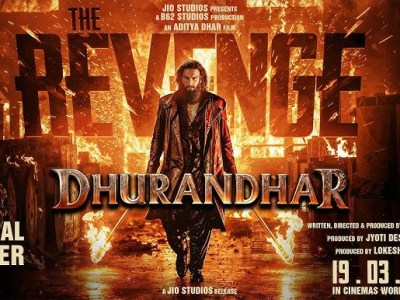
The release of Aditya Dhar’s Dhurandhar in December 2025 has done more than just shatter box office records; it has ripped the scab off a festering wound in the Indo-Pak geopolitical narrative. While the film is being hailed as a cinematic powerhouse by millions, a specific circle of “intellectual” gatekeepers—the likes of Arfa Khanum Sherwani, Dhruv Rathee, and Anupama Chopra—have reflexively reached for their favorite label: Propaganda.
The controversy has even crossed oceans, with six countries including the UAE, Saudi Arabia, Qatar, Kuwait, Oman, and Bahrain banning the film. Their reasoning? Anti-Pakistan sentiment. But it is fascinating, and frankly exhausting, to watch this predictable choir sing in unison. They claim the film unfairly targets Pakistan or distorts reality. But when we strip away the cinematic flourishes, we find that the “fiction” they are so eager to debunk is a mirror image of the very “facts” Pakistan has spent a decade trying to sell to the International Court of Justice (ICJ).
The Role of Hamza: Infiltrating the Lyari Underworld
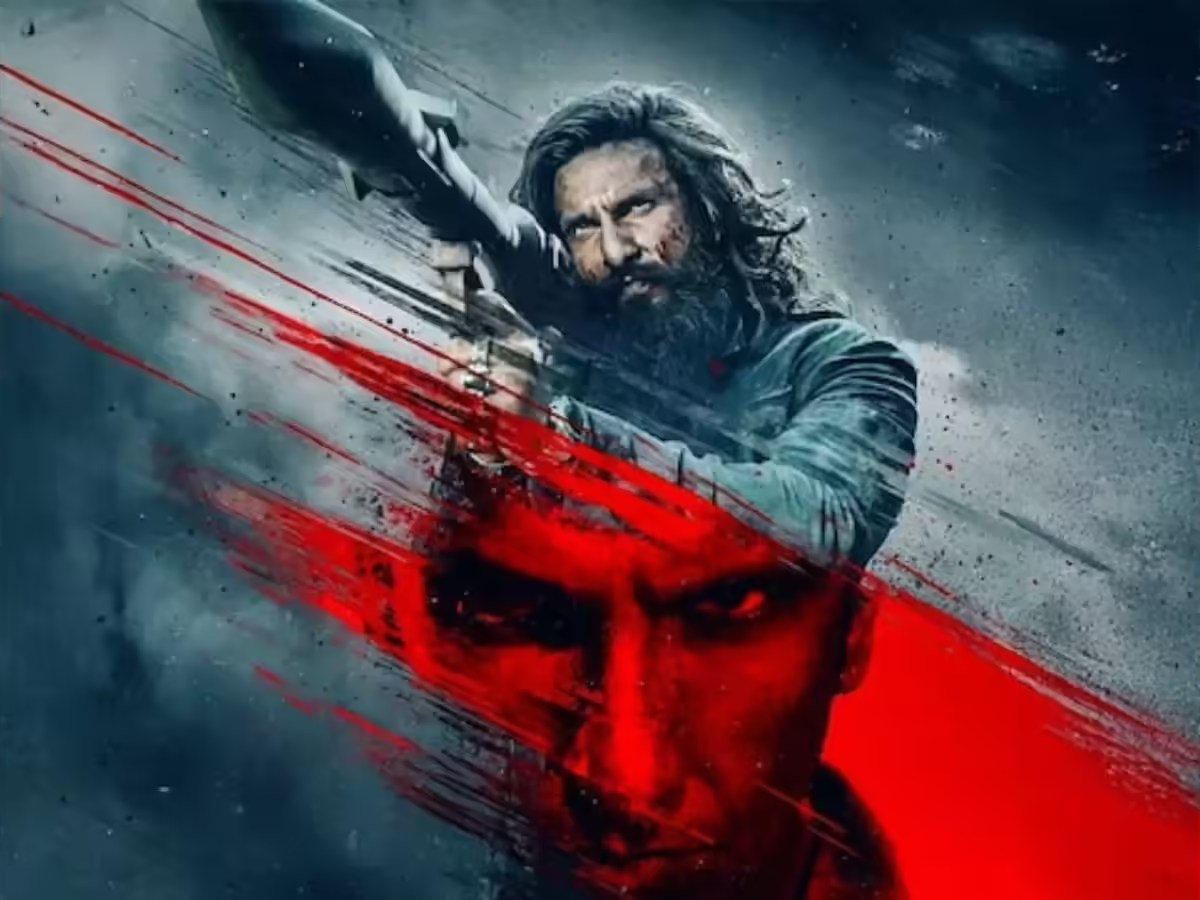
In Dhurandhar, the protagonist Hamza (played by Ranveer Singh) represents the quintessential ghost operative. His journey reflects the gritty, high-stakes atmosphere of Operation Dhurandhar, set against the backdrop of the early 2000s—a time when Karachi was less a city and more a battlefield for rival gangs and deep-state actors.
The Infiltration
Hamza enters Pakistan via the porous, sun-scorched desert roads from either Iran or Afghanistan —echoing the real-world transit routes from Chabahar. His mission isn’t just to observe; it is to embed. The film depicts him weaving through the labyrinthine, blood-stained alleys of Lyari, Karachi’s oldest and most volatile settlement.
Working with the Baloch
The movie elaborates on Hamza’s tactical alliance with the Baloch gang. In the film’s narrative, he doesn’t just hire muscle; he navigates the complex tribal loyalties and the deep-seated resentment the Baloch community feels toward the Pakistani state. He is shown operating within the gang structures of the Lyari Underworld, exploiting the chaos of the gang wars to gather intelligence on state-sponsored actors. He works alongside figures like Rehman Dakait and Uzair Baloch, mirroring the exact connections Pakistan alleged in its real-life spy dossiers.
This is Propaganda—Or is it a Pakistani Script?
The “critics” call this a fever dream of Indian nationalism. Yet, this is exactly the script Pakistan wrote for its own dossiers. They claimed a real-life Indian, Kulbhushan Jadhav, did exactly this. Look at the chilling parallels:
- The Identity: Pakistan claims Jadhav is a serving Commander in the Indian Navy (commissioned in 1991) on secondment to R&AW. India maintains he is a retired officer who left the Navy in 2001.
- The Alias: He allegedly operated under the cover name “Hussain Mubarak Patel.” Pakistan claims he carried an “authentic Indian passport” with this fake name, issued in 2003 and renewed in 2014.
- The Front: He allegedly ran a scrap metal/cargo business called “Kaminda Trading Company” in Chabahar, Iran, since 2003 as a deep-cover base.
Pakistan’s Own Legal “Counter-Memorial”
Pakistan’s legal “Counter-Memorial” to the ICJ and subsequent dossiers specifically linked Jadhav to the Lyari underworld. They alleged:
- The Uzair Baloch Connection: In 2017, Pakistan moved Uzair Baloch into military custody, claiming he provided sensitive information to Jadhav.
- Sectarian Killings: Pakistan alleged Jadhav met with Lyari gang leaders to coordinate sectarian “targeted killings.”
So, which version of Pakistan is true? The one that claims these events happened to justify detaining an Indian national, or the one the critics are protecting by calling the movie a lie?
The Lyari Reality vs. The Critic’s Delusion
The film’s backdrop—the war between Rehman Dakait and Arshad Pappu, the brutal end of Babu Dakait, and the rise of Uzair Baloch—is not fiction. These were bloody, historical realities of Karachi. The “propaganda” these critics cry about is simply the inclusion of an Indian perspective in a theater of war that Pakistan has already claimed we were part of.
The reality of gang war in Lyari, the encounter of SP Chaudhary Aslam, and the reality of the Arshad Pappus of the world are well known to any serious student of South Asian security. What is “controversial” isn’t the history; it’s the fact that an Indian filmmaker had the audacity to use Pakistan’s own accusations as a blueprint for a hero’s journey.
the “Propaganda” Brigade
It is time to call out the blatant intellectual dishonesty of the gatekeepers who seem more offended by a Bollywood script than by a decade of illegal detention of an Indian citizen.
To Arfa Khanum Sherwani:
You speak of “nuance” and “harmony,” yet your silence on the illegal detention of an Indian national is deafening. When a movie shows the struggle of an operative, you call it a “distraction” or “showing Pakistan in a bad light.” Why is your empathy always directed toward the narrative of a state that harbors UN-designated terrorists? If the movie is a lie, then Jadhav’s incarceration is a crime. Where is your video demanding his return? Your brand of “secularism” seems to stop exactly where Indian national interest begins.
To Dhruv Rathee:
Your “educational” videos often cherry-pick facts to suit a “neutral” aesthetic that is anything but. By mocking the concept of Dhurandhar, you mock the very real sacrifices of the intelligence community. You act as if Karachi in 2000s was a botanical garden rather than a war zone. You made a video mocking the film’s “unrealistic” plot, but you’ve never made a video explaining why Pakistan’s ICJ dossier looks exactly like the movie you’re laughing at. Your “analysis” is less about truth and more about maintaining a brand of contrarianism that consistently undermines India while shielding Pakistan from the consequences of its own claims.
To Anupama Chopra:
To dismiss the visceral reality of this film as “problematic” or “too violent” is the ultimate display of ivory-tower privilege. While you sit in air-conditioned comfort critiquing the “masculinity” of a film, men like Jadhav rot in a dark cell because of the very dossiers this movie mirrors. Your aesthetic sensibilities are more offended by “loud” patriotism than by the quiet, decade-long suffering of a fellow citizen. You call it a “tough sit”? Imagine the “tough sit” of a man illegally detained for ten years.
Conclusion: A Call to Accountability
If the role of Hamza is a work of imagination, a fictitious role, and a work of pure “propaganda,” then Arfa Khanum, Dhruv Rathee, and Anupama Chopra should go ahead and ask their “peace-loving” Pakistan to release an illegally detained, innocent Indian civilian. UAE and the other five countries should also join.
They cannot have it both ways. They cannot call the movie a “lie” while ignoring that Pakistan calls the movie’s plot “the truth” in international court. It has already been a decade while Kulbhushan Jadhav is rotting in a Pakistani jail.
Dhurandhar isn’t just a movie; it’s a provocation to the conscience of an elite class that has spent too long defending the indefensible. While the critics sip lattes and draft their “reviews,” a man is living the nightmare they claim is nothing more than a “work of imagination.”
Thanks for reading. If you find a left-liberal-psuedo-intellectual complaining about the movie, please quote this on my behalf.
Also read:
- Reasons Why Pakistan Chose Ceasefire in the 2025 India-Pakistan Conflict
- Imran Khan, Khyber Pakhtunkhwa, the establishment and the downfall of Pakistan!
- The very old Pakistan where terrorism is a constant; nothing changes!
- The only way to get rid of terrorism!!!
- Pakistan’s Terror Web: DG ISPR’s Lies Unraveled by UN Truths





 Infinite Sea of Opportunities
Leave a comment