
For over three decades, the Polar Satellite Launch Vehicle (PSLV) has been the quiet backbone of India’s space ambitions. It launched Chandrayaan-1, carried the Mars Orbiter Mission, and once stunned the world by deploying 104 satellites in a single mission. Within ISRO, PSLV earned a simple nickname: Old Reliable.
That reputation is now under pressure.
On 12 January 2026, PSLV-C62 failed, following a strikingly similar anomaly during PSLV-C61 in May 2025. Two failures in less than a year — both linked to the third stage (PS3) — have raised uncomfortable questions. Is this just statistical bad luck, or is something deeper changing inside India’s most trusted rocket program?
A closer look suggests the answer lies not in one mistake, but at the intersection of technology upgrades, industrial transition, and commercial pressure — all unfolding in the unforgiving SpaceX era.
1. The Carbon-Carbon Gamble: When Performance Meets Risk
The most consistent technical thread linking PSLV-C61 and C62 is the PS3 solid rocket motor. For nearly 60 missions, this stage used a conservative and well-understood graphite nozzle, valued more for predictability than cutting-edge performance.
However, multiple indicators from recent missions suggest ISRO may have introduced a Carbon-Carbon (C-C) composite nozzle in the PS3 stage — a move aligned with global trends toward lighter, higher-temperature materials.
From a design perspective, the motivation is clear.
Carbon-carbon composites:
- Are lighter than graphite
- Tolerate higher temperatures
- Potentially improve payload mass and margins
In a commercial launch market dominated by SpaceX’s aggressive pricing, every kilogram matters.
But material science is as complex as it can get. Telemetry from the PSLV-C62 mission reportedly showed an unexpected roll disturbance and a drop in chamber pressure late in the PS3 burn. For a solid rocket motor, this pattern is consistent with uneven nozzle erosion or partial structural failure, which can distort thrust vectors in milliseconds.
A mature rocket design is reliable precisely because it doesn’t change. Once you swap a legacy component for a high-performance one, you don’t just gain efficiency — you inherit new failure modes. In that sense, PSLV isn’t “suddenly unreliable”; it is learning new physics the hard way.
2. From Scientific Craft to Industrial Scale: The Production Chasm
One of the most under-discussed changes in the PSLV program has nothing to do with hardware — and everything to do with how the rocket is built.
In 2022, ISRO transferred end-to-end production of multiple PSLV vehicles to a HAL–L&T industrial consortium. Strategically, this made sense. ISRO needed to free its scientists for programs like Gaganyaan, NGLV, and deep-space missions.
But India has seen this transition before — most notably with the LCA Tejas.
There is a vast chasm between:
- Building rockets through scientific craftsmanship
- Producing them through industrial standardization
Inside ISRO, quality assurance was often reinforced by institutional memory — engineers who understood the subtle “moods” of solid propellant casting, curing cycles, and environmental sensitivities.
Factories, by contrast, rely on SOPs, documentation, and statistical controls. If those SOPs fail to capture edge-case chemistry or long-tail risks, you don’t get immediate disasters — you get batch-linked anomalies.
Two PS3-related failures within eight months strongly suggest that this production handover is still stabilizing. The problem may not be incompetence — it may simply be that rocket science does not like being industrialized too quickly.
3. Commercial Pressure: Stretching a 30-Year-Old Architecture
The PSLV of 2026 is no longer just a national launcher. Under NewSpace India Limited (NSIL), it is now a commercial product competing directly with SpaceX’s Transporter rideshare missions.
That competition has consequences.
PSLV-C62 carried 16 satellites, including the high-value EOS-N1 (Anvesha) payload. This isn’t merely about mass. Each additional satellite:
- Increases deployment complexity
- Requires tighter orbital accuracy
- Reduces performance margins
SpaceX’s Falcon 9 was designed from the ground up as a modular launch bus. PSLV was not. It was optimized for reliability, not flexibility. Falcon 9 has flown hundreds of missions in little over a decade, while PSLV has completed 64 missions across three decades.
When a legacy system is pushed toward maximum utilization to stay price-competitive, the first thing that erodes is the very safety margin that made it reliable. In effect, PSLV is being asked to behave like a modern commercial platform — without being one.
4. Silence, Strategy, and the PS3–Missile Link
Public frustration has grown over ISRO’s limited transparency. Failure Analysis Committee (FAC) reports are reportedly routed directly to the Prime Minister’s Office, with no detailed public release.
This isn’t just bureaucratic secrecy — it’s strategic.
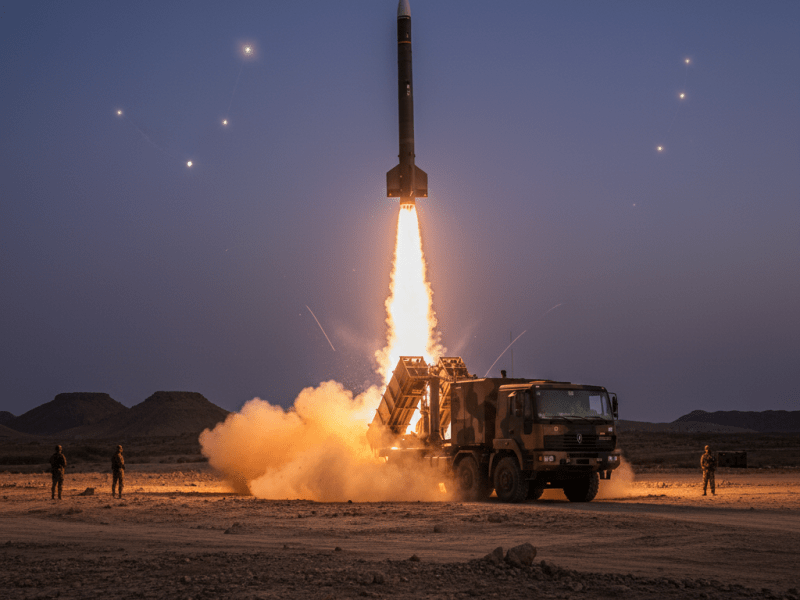
The PSLV’s third stage is a solid-fuel motor, closely related in design philosophy to those used in India’s ballistic missile and submarine-launched deterrent programs. Solid motors are considered strategically sensitive because they are:
- Rapid-response
- Long-storage
- Always launch-ready
Publishing detailed failure data about nozzle erosion, burn instability, or propellant behavior would not merely inform the space community — it would expose design vulnerabilities relevant to India’s missile forces.
This dual-use dilemma is not new. In the 1990s, India leveraged PSLV development to quietly mature its strategic missile capability despite sanctions. Today, that same linkage forces strategic opacity.
The 2019 ASAT test publicly demonstrated more than just anti-satellite capability. To informed observers, it also implicitly signaled mature guidance, interception, and missile defense competence. Transparency, in this domain, has limits — and PSLV sits squarely inside that constraint.
You must read my post on ASAT and BMD technology overlap here: ASAT, ABM and the shifting Nuclear Paradigm
Conclusion: Failure as a Signal, Not a Collapse
The recent PSLV failures do not indicate decay. They indicate transition.
If nothing had changed — materials, manufacturing, payload economics, institutional structure — PSLV would likely still be flying flawlessly. Instead, ISRO is simultaneously:
- Upgrading legacy hardware
- Outsourcing production
- Competing commercially
- Protecting strategic secrecy
That combination is inherently unstable in the short term.
Innovation and failure are inseparable. The PSLV program is paying the price of evolving from a national workhorse into a commercial-strategic hybrid in a SpaceX-dominated world. SpaceX, too, suffered multiple failures in its early years — but it absorbed those lessons through high launch cadence, rapid iteration, and aggressive learning, eventually redefining what launch reliability looks like.
ISRO does not enjoy the same freedom of iteration, disclosure, or failure tolerance — which makes its transition inherently slower and more complex.
The real test is not whether PSLV failed — but whether ISRO can absorb these lessons, recalibrate margins, and re-establish reliability without losing competitiveness.
The next PSLV launch will matter less for its payload — and far more for what it reveals, indirectly, about which path ISRO chooses next.
For now, the only honest position is to watch closely.
In rocketry, silence often speaks louder than success.
Thanks for reading. If you find the post interesting and informative, please do subscribe the post, your support will motivate me to write similar posts in the future.
Also read:










 Infinite Sea of Opportunities
Leave a comment