
The film depicts an encounter between an Indian naval frigate and a Pakistani submarine. The Indian ship is torpedoed, begins to sink—and in a final act of cinematic heroism, its captain destroys the enemy submarine before going down with his ship.
This scene is not “creative liberty.”
It is a complete distortion of history.
And someone should ask the filmmakers to explain why.
Because we are not Pakistan.
Pakistan has, since its independence, systematically taught distorted history to its children and adults—rewriting defeats as victories, erasing uncomfortable facts, and manufacturing myths. The result is visible today: a society unable to self-correct because it never learned the truth.
India must not walk that path. Especially not when it comes to 1971, a war we actually won.
What the Film Is Really Showing (Without Naming It)
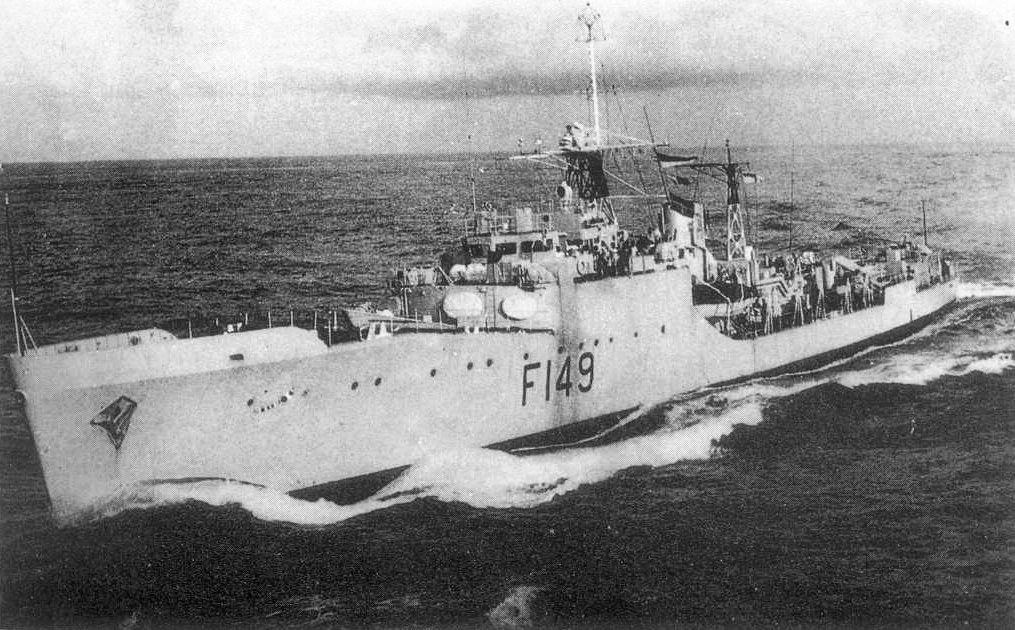
There was only one Indian naval ship sunk in the 1971 war: INS Khukri (F149).
The movie very clearly depicts this incident, just without naming the ship.
But here is what actually happened:
- INS Khukri was torpedoed by PNS Hangor, a Pakistani Daphné-class submarine.
- The ship sank within roughly two minutes.
- This was not a slow, Titanic-like sinking that allowed for last stands or counterattacks.
- The PNS Hangor submarine was not damaged. It escaped completely unharmed.
There was no heroic destruction of the enemy submarine.
The Real Heroism (Which the Film Erases)
The real captain of INS Khukri, Captain M.N. Mulla, did not die in a blaze of cinematic glory.
He did something far more meaningful.
- The moment he realized the ship was sinking, he ordered immediate evacuation.
- He gave his own life jacket to a junior sailor.
- He chose to go down with the ship, as was his duty.
One of the most enduring images associated with him is not of combat—but of composure:
sitting on the deck, lighting a cigarette, calm in the face of certain death.
That is not weakness.
That is discipline.
By turning this into a fantasy kill, the film cheapens real sacrifice instead of honoring it.
What Happened After Khukri Sank
Following the sinking, the Indian Navy launched Operation Falcon.
For four days, every available ship and Breguet Alizé aircraft saturated the area with anti-submarine attacks:
- 156 depth charges were dropped.
- Sonar contacts were aggressively pursued.
The outcome?
PNS Hangor escaped.
The submarine exploited thermal layers—natural temperature gradients in seawater that disrupt sonar detection—to remain hidden. It safely returned to Karachi on 13 December 1971.
To the film’s credit, it briefly acknowledges sonar difficulties.
But acknowledging a problem is not the same as rewriting its consequences.
The Technology Gap the Film Partially Mentions
INS Khukri was never meant to fight a modern submarine in 1971.
- Class: Blackwood-class (Type 14) frigate
- Built by: J. Samuel White, United Kingdom
- Inducted: 1958
By 1971, it was a second-rate vessel:
- Small displacement
- No anti-ship missiles
- Designed for limited coastal anti-submarine duties
The Sonar Catch-22 (mentioned in the movie)
Khukri was equipped with Type 170/174 sonar and was ordered to test an experimental sonar modification during the war.
Here was the fatal flaw:
- To make the experimental sonar effective, the ship had to maintain a steady speed of 12 knots.
- In submarine warfare, speed and zigzagging are the only armor.
- By slowing down to “see,” Khukri made itself an ideal torpedo target.
This was not reckless bravery by the crew.
This was a calculated risk taken by command, and it failed.
The Bigger Picture the Film Refuses to Show
Here is the uncomfortable irony.
The Indian Navy’s performance in 1971 was not just successful—it was decisive. The movie makers if wanted to show a victory there were more than plenty examples to pick from.
Pakistan Navy losses were far heavier:
- PNS Ghazi – Submarine sunk off Visakhapatnam
- PNS Khaibar – Destroyer sunk by Indian missile boats
- PNS Muhafiz – Minesweeper sunk
- Karachi Harbour – Fuel depots, oil tanks, and ships destroyed in
Operations Trident and Python
India achieved:
- Sea control
- Strategic blockade
- Psychological dominance
The naval war was a clear Indian victory.
And yet, the filmmakers chose the only Indian naval loss of the war—and then felt compelled to fake a victory on top of it.
The Real Problem With This Distortion
By choosing INS Khukri and inventing a submarine kill, the film sends a disturbing message:
That India can only win through suicide missions and last-minute individual bravado.
It ignores:
- Superior planning
- Missile warfare innovation
- Intelligence and coordination
- Strategic dominance
It replaces institutional excellence with Bollywood martyrdom.
Worse, it raises suspicion in the mind of any neutral observer:
If the victory was so clear, why does the story need to be fudged?
Sloppy writing like this does not strengthen patriotism.
It undermines credibility.
The Bottom Line
The facts are simple and undisputed:
- INS Khukri was the only Indian naval ship sunk in 1971.
- It did not inflict damage on the Pakistani submarine.
- The Indian Navy still won the naval war decisively.
This was a war won by strategy, technology, and planning, not by fictional last stands.
By rewriting the one real loss into a fake win, the filmmakers disrespect:
- History
- The Navy
- And the audience’s intelligence
India does not need propaganda to feel proud of 1971.
The truth was already good enough.
Thanks for reading! If you find merit in the post, do share it with your friends and family. If you would like to read about the fun facts (haha dhappa moment!) that Indian Navy played on Pak, please do follow the blog for the witty Operation Trident coming soon.
Also read:








 Infinite Sea of Opportunities
Leave a comment