
Karachi’s Lyari was never just a slum.
For decades, it functioned as a violent political laboratory where gangsters, politicians, intelligence agencies, and jihadist networks overlapped in ways that would make even the most cynical thriller writer pause. Power in Lyari was rarely decided by elections or courts. It was decided by guns, patronage networks, and the quiet nod of men operating far above the street.
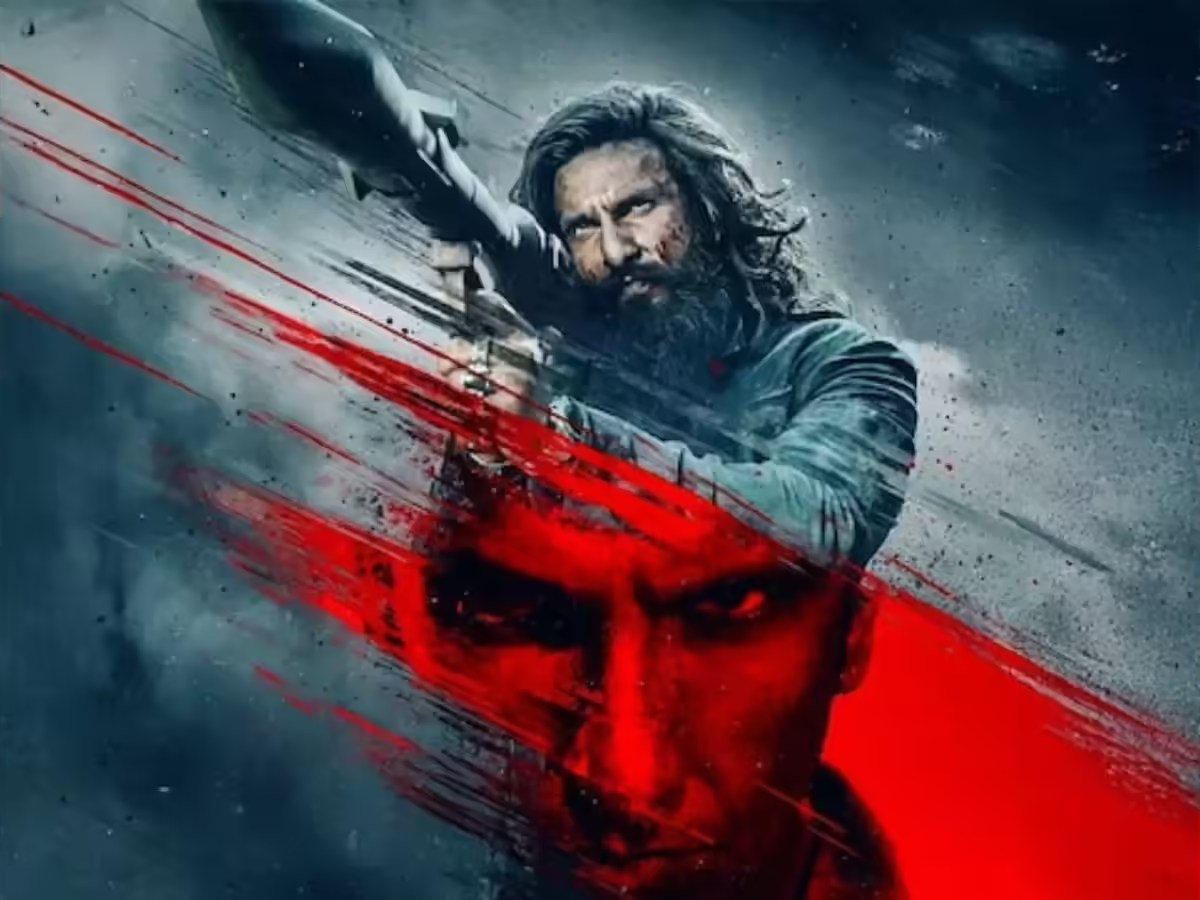
This is the world that forms the shadow behind Dhurandhar. When Aditya Dhar released the first part of the film, it was celebrated as a bold reinvention of the Indian spy thriller. But for those familiar with Lyari’s bloody history, the movie still feels like a sanitized version of reality.
The trailer for Dhurandhar Part 2 has now arrived, with the film scheduled for release on March 19, 2026.
The sequel promises to explore the deeper layers of the Karachi network that the first part only hinted at. Yet the real story of Lyari is so brutal that even the darkest cinematic imagination struggles to keep up.
To understand what might come next in the film, we must look at the real “death files” of the men who once ruled Karachi’s most infamous district.
Rehman Dakait: The Kingmaker of Lyari
The first piece on this deadly chessboard was Rehman Dakait.
In Dhurandhar, Akshaye Khanna’s character Rehman Baloch appears as a charismatic gangster who commands loyalty and fear in equal measure. The portrayal captures his swagger, but it misses the deeper truth: Rehman Dakait was not merely a criminal. He was a political asset.
By the mid-2000s, Lyari had become an important electoral and strategic zone for Pakistan’s political elite. Rehman Dakait’s gang effectively controlled large parts of the area, and his network was often aligned with powerful political patrons.
One of the most revealing episodes occurred in 2007 when Benazir Bhutto returned to Pakistan after years in exile. Rehman Dakait provided members of his network as part of the “Janisar-e-Benazir”, the human shield surrounding her convoy during the massive rally in Karachi.
He was reportedly present during the infamous Karsaz bombing, which targeted Bhutto’s procession and killed more than a hundred people.
This level of proximity to national politics explains why Rehman Dakait’s death in 2009 was not merely the elimination of a gangster. It was the removal of a man who knew too much.
On August 9, 2009, he was killed in what Pakistani authorities described as a police encounter led by SSP Chaudhry Aslam’s Lyari Task Force. Official accounts described a gun battle. Critics and local observers described something else: a carefully staged execution.
Either way, the king of Lyari was gone.
But the empire did not disappear.
What after the death of Rehman Dakait?
To understand the stakes of Dhurandhar 2 (releasing March 19, 2026), we must look at the “Death Files” of the Lyari gangs and the Deep State.
Uzair Baloch: The Heir to Chaos
Rehman’s death created a vacuum that was quickly filled by his cousin, Uzair Baloch.
In August 2009, Uzair took command of the People’s Aman Committee (PAC) and inherited not only Rehman’s criminal network but also his political connections. The PAC initially presented itself as a community organization meant to defend Lyari’s residents, but it soon became a powerful armed faction controlling extortion, smuggling, and territory.
If Rehman Dakait had been feared, Uzair Baloch soon proved something far worse.
Violence escalated dramatically under his leadership. Rival gangs were hunted down, neighborhoods became battlegrounds, and Lyari turned into a war zone within Pakistan’s largest city.
By 2011, the Pakistani government formally banned the People’s Aman Committee under the Anti-Terrorism Act. But by then the damage was already done.
Uzair Baloch had transformed Lyari’s criminal ecosystem into something far more brutal than what existed before.
Arshad Pappu(Killed 2013): A Sequel’s Darkest Horror
Every gang war has moments when brutality becomes so extreme that it shocks even hardened observers.
In Lyari, that moment came in March 2013.
Uzair Baloch’s main rival was Arshad Pappu, another powerful gang leader who had built his own network in Karachi. Their rivalry had already produced years of violence, but what happened in 2013 pushed the conflict into a realm that seemed almost surreal.
Arshad Pappu was kidnapped by Uzair’s men. He was then beheaded.
According to widely reported accounts, members of the gang allegedly played football with his severed head, while onlookers watched.
Whether exaggerated or not, the story spread across Karachi like wildfire, becoming a symbol of how deeply Lyari had descended into lawless brutality.
For filmmakers trying to depict Lyari’s underworld, this is the kind of episode that reveals the limits of cinema. Reality, in this case, was already more grotesque than fiction.
A certain kind like Arfa Khanum Sherwani have labeled Part 1 “ultra-nationalist propaganda, misogynistic, gory violent” mourning the “death of syncretic Bollywood.” I have deep sympathy for their pain once the part 2 is released.
Also read: The Cultural Trauma of Dhurandhar: Why ‘Arfa Khanum’ Can’t Reconcile with the New Reality
While Bollywood once gave us a dreamy Pakistan in Veer-Zaara, Aditya Dhar has demolished that myth with documented reality. If he depicts even a fraction of this “Dark Lyari,” it will be the most controversial cinematic event of 2026.
Also read: Dhurandhar: 5 Bollywood Myths Dismantled in 2025
SP Chaudhry Aslam(Martyred 2014): The “Lion” and the TTP
If Lyari had gangsters, it also had a relentless pursuer.
That man was SP Chaudhry Aslam Khan, the legendary “encounter specialist” of the Karachi police.
After eliminating Rehman Dakait in 2009, Aslam continued his operations against criminal networks and militant groups. By 2012 and 2013, he had become one of the most recognizable faces of Pakistan’s internal war against terrorism.
His targets were not limited to gangs. He was also pursuing extremist organizations such as Tehreek-e-Taliban Pakistan (TTP) and Lashkar-e-Jhangvi, groups that had increasingly embedded themselves within Karachi’s complex web of crime and militancy.
This made him a marked man.
Assassination attempts against Aslam became frequent. Bomb attacks, ambushes, and targeted strikes repeatedly failed to eliminate him.
But in January 2014, the attempts finally succeeded.
A TTP suicide bomber attacked his convoy on the Lyari Expressway, killing him along with several others. For the militants, it was the elimination of a persistent enemy. For Karachi, it was the loss of one of the few officers willing to challenge both gangs and terrorists.
His death was also a grim reminder that Pakistan’s internal conflicts were often entangled with forces far beyond the city itself.
Illyas Kashmiri (Killed 2011): Good Taliban to Bad Taliban
Another shadow looming over this story is Illyas Kashmiri, one of the most notorious jihadist commanders of the post-9/11 era.
Kashmiri had once been associated with militant networks that enjoyed varying degrees of tolerance from Pakistan’s security establishment. But the geopolitical landscape shifted dramatically after the September 11 attacks and the subsequent U.S. pressure on Pakistan to curb militant activity.
As Pakistan launched operations in tribal regions and attempted to dismantle certain militant networks, figures like Kashmiri increasingly turned hostile toward the state itself.
He was linked to a number of major attacks, including the 2009 assault on Pakistan’s General Headquarters in Rawalpindi and the 2011 attack on the PNS Mehran naval base in Karachi.
By then, Kashmiri had become an enemy not only of the United States but also of the Pakistani establishment that had once tolerated elements of his network.
On June 3, 2011, he was killed in a U.S. drone strike in South Waziristan, ending the career of one of the most dangerous militant commanders in the region.
His trajectory reflected a broader pattern in Pakistan’s militant landscape: allies could quickly become adversaries.
Uzair Baloch and the final act of espionage!!
One of the most intriguing dimensions of Dhurandhar is its connection to the real-world controversy surrounding Kulbhushan Jadhav, the Indian national arrested by Pakistan in 2016 on charges of espionage.
Pakistan’s official dossier claims Jadhav was part of a covert network operating in regions such as Karachi and Balochistan.
Ironically, the methods used by the fictional protagonist in Dhurandhar mirror many of the activities described in Pakistan’s own allegations.
This creates a curious paradox.
If the film is dismissed as propaganda, then Pakistan’s narrative about Jadhav begins to look suspiciously cinematic. But if the film reflects realistic espionage methods, then it inadvertently mirrors the very accusations Pakistan itself has made.
Either way, the overlap between fiction and geopolitical claims adds another layer of intrigue to the story.
I wrote a complete post highlighting the similarities between the two. Please have a look at the following posts:
The Disappearing Masterminds
Beyond the gang leaders and militants, another layer of the shadow war involved the financial and logistical networks that sustained these operations.
Among the most famous were the Khanani brothers, often described as the “bankers of terror.” Their global money-laundering operations moved vast sums across continents, linking criminal networks, militant groups, and political actors.
The network eventually collapsed under international pressure.
In 2016, post demonetization, Javed Khanani died after jumping from an eighth-floor building in Karachi, while his brother Altaf was captured in a U.S. Drug Enforcement Administration sting.
Meanwhile, several other figures associated with militant organizations have disappeared under mysterious circumstances in recent years.
Some died in prison from sudden illnesses. Others vanished following covert operations or drone strikes.
In Pakistan’s shadow wars, death rarely arrives in predictable ways.
Conclusion: The Price of Substance
The real history behind Dhurandhar is not a story of clear heroes and villains.
It is a story of gangsters who became political tools, militants who turned against their former sponsors, and law-enforcement officers who fought battles that extended far beyond city streets.
One by one, the major players in Lyari’s violent saga have disappeared — killed in encounters, assassinated by militants, eliminated in drone strikes, or quietly erased from the stage.
Yet the system that produced them remains.
As audiences prepare to watch Dhurandhar Part 2, the film may offer thrilling confrontations and dramatic revelations. But the truth behind Karachi’s shadow war is far darker than any screenplay.
Because in Lyari’s real history, victories are temporary, alliances are fragile, and every pawn on the chessboard eventually pays the price.
The question is not whether the hero survives.
The real question is whether anything survives at all.
Thanks for reading!
Also read:
- The Two reasons why they don’t want you to watch Dhurandhar!
- Dhurandhar—The 3.5-Hour Epic That is Filling Theaters in the UK: A Non-Spoiler Review
- Fact vs Fiction: Border 2 and INS Khukri
- Fact vs Fiction: Border 2 and The battle of Basantar
- Fact vs. Fiction: What the film Dhurandhar Reveals About India’s Currency Security Crisis




 Infinite Sea of Opportunities
Leave a comment