
For decades the rules of war seemed clear.
If the United States entered a conflict, the outcome was rarely in doubt. The world’s largest military budget, unmatched technological superiority, and a network of global alliances meant that Washington could outfight almost any adversary.
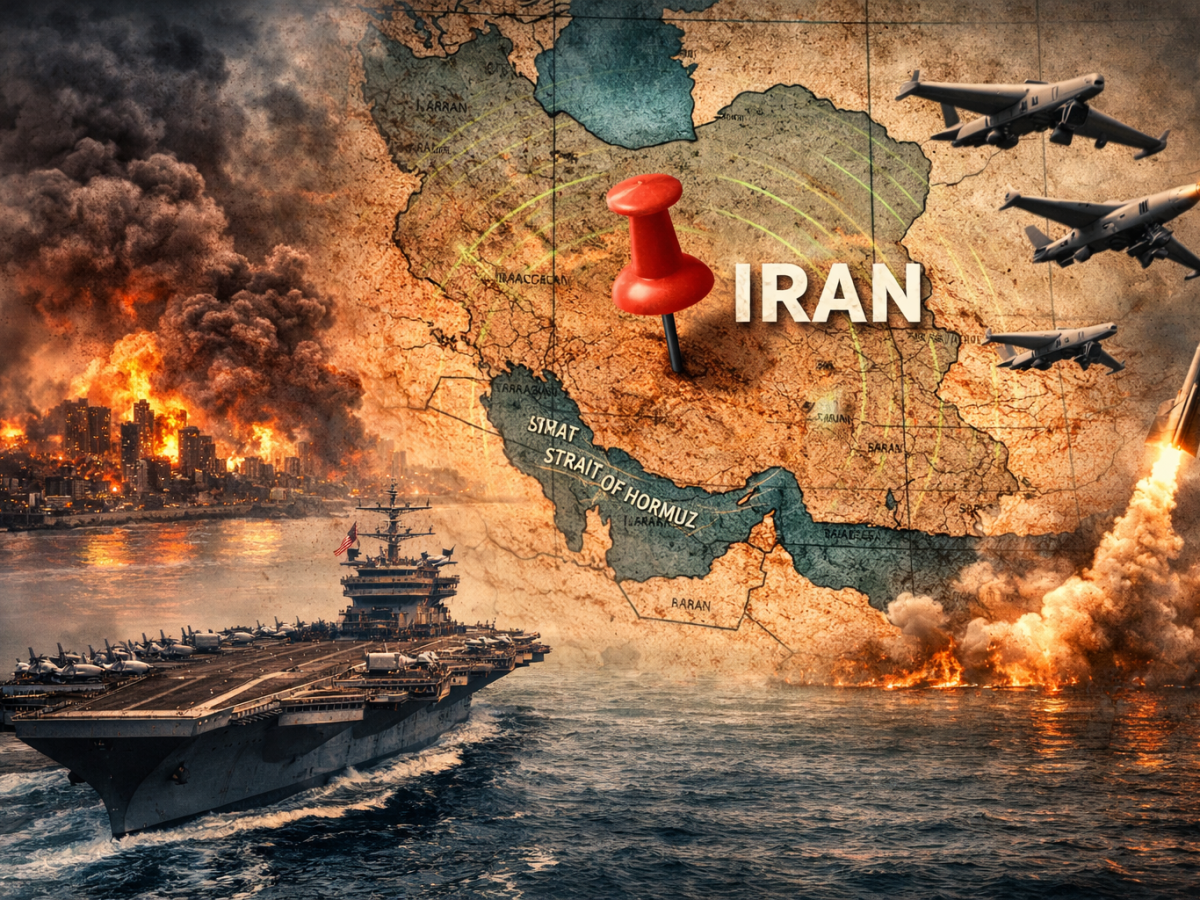
But in the opening days of the current confrontation with Iran, something deeply uncomfortable is becoming visible.
The United States is not losing battles.
Its aircraft still dominate the skies.
Its naval fleets still control the seas.
Yet beneath this overwhelming military superiority, a quieter crisis is unfolding.
The United States is facing what analysts are increasingly calling an interceptor missile problem.
And strangely enough, the weapon creating this problem is not a hypersonic missile, a stealth aircraft, or a nuclear deterrent.
It is a cheap drone.
A drone that costs roughly $20,000–$50,000.
And every time the United States shoots it down, it may spend millions of dollars doing so.
This is not just warfare.
It is economic warfare in the sky.
Iran’s Strategy: Flood the Sky
Iran is not trying to defeat the United States through technological superiority.
That would be impossible.
Instead, Tehran appears to be playing a much simpler game.
Overwhelm the defenses.
The centerpiece of this strategy is the Shahed-136, a loitering munition often described as a “kamikaze drone.”
The system is remarkably simple:
- Range of up to 2,000 km
- Warhead around 40–50 kg
- GPS-guided targeting
- One-way mission — it explodes on impact
Soldiers often describe its sound as resembling a flying lawnmower.
But the real genius of the system is not its design.
It is its price.
Each drone costs roughly $20,000–$50,000, making it dramatically cheaper than almost any modern missile system.
More importantly, the drones are designed for mass production.
Iran’s defense industry has built factories capable of producing large quantities every month, allowing Tehran to deploy them in swarms.
And when hundreds of drones appear simultaneously, air-defense systems face a very different challenge.
The American Shield: Powerful but Expensive
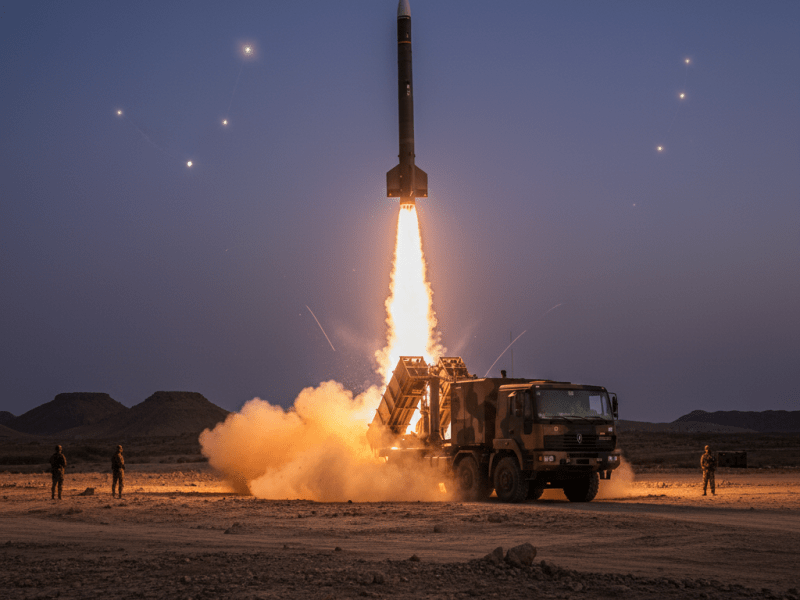
To defend high-value targets such as military bases, infrastructure, and naval fleets, the United States uses some of the most advanced air-defense systems in the world.
One of the most important among them is the MIM-104 Patriot.
The Patriot system is capable of intercepting:
- ballistic missiles
- cruise missiles
- aircraft
- drones
It is an extraordinary piece of military engineering.
But there is one problem.
The interceptor missiles are extremely expensive.
Each Patriot interceptor costs roughly $3 million to $8 million, depending on the variant.
And military doctrine often requires firing two interceptors to guarantee a successful kill.
That means destroying a single incoming threat may cost $6 million or more.
Now compare that to the price of the attacking drone.
A $30,000 drone forcing the launch of a $6 million interceptor.
This is not a favorable exchange.
The Cost Exchange Problem
Military planners refer to this dynamic as the cost-exchange ratio.
And in this case, the numbers are brutal.
Imagine Iran launches 100 drones.
Iran’s cost:
approximately $3 million
The United States’ interception cost:
potentially $600 million or more.
Even if every drone is destroyed, Iran still wins the financial exchange.
And that is exactly the point.
Iran does not need every drone to reach its target.
It only needs the United States to keep firing interceptors.
The Stockpile Reality
Cost is only the first part of the problem.
The second issue is stockpiles.
Interceptor missiles are highly sophisticated weapons. They require complex electronics, advanced propulsion systems, and precision manufacturing.
As a result, production rates are limited.
For example, the United States produces hundreds of Patriot interceptors annually, not thousands.
Meanwhile, drones like the Shahed-136 are built using far simpler components.
Many of their parts resemble those used in civilian technology — small engines, commercial electronics, and basic navigation systems.
This makes them much easier to produce in large numbers.
The result is an uncomfortable asymmetry.
One side produces cheap weapons in mass quantities.
The other produces extremely advanced but limited interceptors.
In a prolonged conflict, that imbalance can become decisive.
The “Long War” Concern
This is why analysts are increasingly discussing the possibility of a long war.
And the phrase sounds strange.
The conflict is barely days old.
Yet military planners are already thinking about sustainability.
Because missile defense is not simply about technology.
It is about inventory management.
Every interceptor launched is one fewer available tomorrow.
And if attacks continue day after day, those inventories can shrink rapidly.
The Ukraine Connection
The problem becomes even more complicated because the United States is already heavily supplying interceptor missiles to Ukraine in the Russia–Ukraine War.
Since the start of the war, Western air-defense systems have played a crucial role in protecting Ukrainian cities from Russian missile attacks.
Among the systems deployed are the MIM-104 Patriot batteries.
But those missiles come from the same Western stockpiles.
If the United States begins diverting interceptor missiles to protect its forces and allies in the Middle East, Ukraine may suddenly face a shortage.
And Russia has already demonstrated its willingness to exploit such weaknesses.
Moscow has adopted the same strategy of drone saturation, launching waves of Iranian-designed drones to exhaust Ukrainian air defenses.
If interceptor supplies decline, Russia could gain a significant advantage.
China Is Studying This Carefully
There is another country watching these developments very closely.
China.
Military planners in Beijing are analyzing how American air-defense systems behave under large-scale saturation attacks.
The implications extend directly to a potential future conflict over Taiwan.
China possesses:
- vast missile inventories
- large drone production capacity
- one of the world’s largest industrial bases
If thousands of relatively cheap weapons can overwhelm expensive defensive systems, the strategic equation changes dramatically.
The Rise of Swarm Warfare
For decades Western military doctrine emphasized precision warfare.
Fewer weapons.
Greater accuracy.
More advanced technology.
Iran’s strategy flips this model entirely.
Instead of precision, it emphasizes volume.
Instead of expensive systems, it relies on cheap, expendable platforms.
Instead of trying to defeat the enemy technologically, it attempts to exhaust the enemy economically.
This approach is often described as swarm warfare.
Large numbers of drones and missiles launched simultaneously overwhelm defenses through sheer volume.
Even if most are intercepted, a few may slip through.
And the cost of defending against them becomes enormous.
The Future of War May Be Cheap
The early stages of this conflict are revealing an uncomfortable reality.
Military superiority in the 21st century may not belong solely to the country with the most advanced weapons.
It may belong to the country that can produce the most weapons at the lowest cost.
Cheap drones.
Mass production.
Relentless saturation attacks.
These are not the technologies that dominate military parades.
But they may define the wars of the future.
Because sometimes the most dangerous weapon on the battlefield is not the most sophisticated one.
It is simply the one you can afford to launch thousands of times.
Thanks for reading! There have been so many wars and so many weapons, if you like to know what is happening in the defence tech and strategies, please do follow/subscribe my blog.
In the meanwhile also read:
- The Drone Race: A New Era of Innovation in India Amid Conflict
- A Three-Day War That Shook the War Economy
- Pralay Explained: Why the “Apocalypse” Missile is Pakistan’s Strategic Dead End
- ₹79,000 Crore DAC Approvals: How India’s ‘Arms Race’ Is Fuelling Atmanirbhar Growth
- The JF-17 Myth: Is Pakistan’s ‘Thunder’ Just a Social Media Success? (Technical Analysis)
- Rafale Deal sums up India’s journey from “Marut” to “Tejas”








 Infinite Sea of Opportunities
Leave a comment