
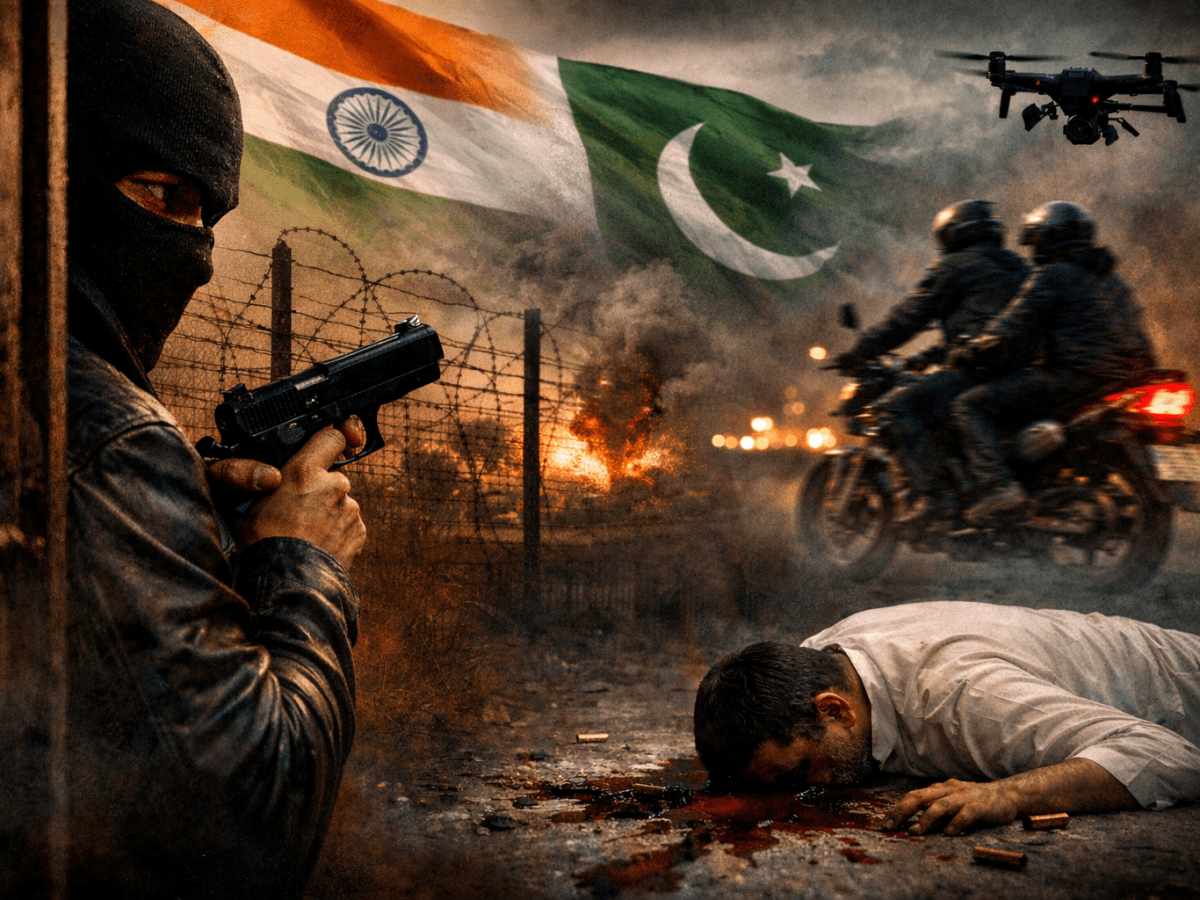
“No water. No food. No hope.” These aren’t just words—they’re the dying gasps of a nation collapsing under its own weight. In April 2025, India’s suspension of the Indus Waters Treaty (IWT)—once unthinkable—paired with devastating missile and drone strikes deep inside Pakistani territory, wasn’t just a geopolitical flex. It was a brutal mirror held up to a nation unraveling at its core. Pakistan is no longer on the brink of civil war—it’s sliding into one, inch by agonizing inch. Political dysfunction, economic strangulation, ethnic rebellions, a humiliated military, and India’s relentless pressure form a perfect storm. This isn’t about “if.” It’s about when the explosion rips Pakistan apart.
Why Civil Wars Erupt: A Brutal Primer
Civil wars don’t spark overnight. They fester in a cauldron of injustice, incompetence, and despair, erupting when the state can no longer hold its fractures together. Scholars and conflict analysts identify a deadly recipe:
- Political Collapse: When governments are corrupt, ineffective, or authoritarian, trust evaporates. Power vacuums invite militias, warlords, or extremists to fill the void.
- Economic Breakdown: Starvation, joblessness, and resource scarcity—especially water or food—turn desperation into violence. Hungry people don’t negotiate; they fight.
- Social Fractures: Ethnic, regional, or religious divides, when weaponized, become fault lines. Marginalized groups arm themselves when the state fails them.
- External Triggers: Foreign interventions, sanctions, or resource control (like India’s IWT suspension) can break a fragile state’s back.
- A Spark: A single event—a military defeat, an economic collapse, a terror attack—can ignite the tinderbox.
Syria’s war began with protests against a brutal regime. Libya’s spiraled from tribal rivalries post-Gaddafi. Sudan’s erupted from a military power grab. Yemen’s was fueled by water scarcity and foreign strikes. Pakistan in 2025 checks every box, and the alarms are screaming.
Pakistan: The Perfect Storm
Pakistan is a textbook case of a nation primed for civil war. Its political system is a sham, its economy is bleeding out, its ethnic divides are erupting, its military is humiliated, and India’s strategic offensive is the final nail. Let’s dissect the carnage.
1. Politics: A Rotten Core
Pakistan’s democracy is a cruel joke, a puppet show run by generals. Military coups in 1958, 1977, and 1999 have gutted civilian rule, leaving politicians as spineless figureheads. Imran Khan, the closest Pakistan came to a unifying leader, ignited hope with his Pakistan Tehreek-e-Insaf (PTI). His fiery rhetoric and populist appeal made him a cult figure for the disillusioned middle and working classes. But the military crushed that dream, jailing him for almost 650 days on trumped-up charges from 2023 to 2025. His release on bail, forced by riots during Operation Sindoor in early 2025, wasn’t a victory—it was a desperate concession by a rattled Establishment.
Operation Sindoor, meant to quash PTI protests, backfired spectacularly. Government buildings burned, streets erupted, and the military blinked. Nawaz Sharif’s PML-N and Bilawal Bhutto’s PPP are seen as dynastic lapdogs, irrelevant to a population craving change. With no credible leaders, people are turning to whoever promises power—militants included. This is Libya post-Gaddafi, where a power vacuum birthed warlords. Pakistan’s political rot is a ticking bomb.
2. Water War: The Economic Knife to the Throat
India’s suspension of the IWT in April 2025 is not just a policy shift—it’s economic annihilation. The treaty, signed in 1960, gives Pakistan the Indus, Jhelum, and Chenab rivers—135 million acre-feet, 80% of the Indus system’s flow. Agriculture, contributing 25% to GDP and employing 65% of the workforce, relies on these waters for 80% of irrigated land (16 million hectares). Hydropower from Tarbela (4,888 MW) and Mangla (1,150 MW) powers a third of the grid. India’s chokehold is apocalyptic:
- Immediate Devastation: Since March 1, 2025, the Shahpurkandi Dam has cut off the Ravi River’s flow to Pakistan, redirecting it to Indian fields. Sediment flushing at Baglihar Dam (Chenab) slashed flows by 90% in May 2025, a grim preview of what’s coming. India’s halted sharing water flow data, flood warnings, and project plans, leaving Pakistan blind to upstream changes. Farmers can’t plant; dams can’t prepare.
- Long-Term Ruin: India’s fast-tracking projects like the Ranbir Canal expansion (Chenab, from 40 to 150 cubic meters per second), Ratle Dam (850 MW), and Kishanganga II to divert Western River water. Wheat and rice production, feeding millions, faces collapse. Food prices are skyrocketing—rice up 40% in markets since April. Hydropower shortages, with Tarbela at historic lows, deepen blackouts (electricity prices up 150% since 2021). Billion-dollar dams, built with loans, risk becoming scrap, with zero return on investment.
- Deindustrialization: No water, no power, no business. Pakistan’s textile industry, 60% of exports, is hemorrhaging. Foreign investors are fleeing—FDI dropped 20% in 2024. With $130 billion in debt and $8 billion in reserves, Pakistan’s economy is a corpse. Youth (median age ~22) face joblessness, ripe for radicalization.
This is Yemen 2.0, where famine turned civilians into soldiers.
3. Ethnic Fire: The Nation Within a Nation
Pakistan isn’t one people—it’s a patchwork of ethnicities at war. The Baloch Liberation Army (BLA) has transformed from a fringe group into a relentless insurgency. In 2025, it launched over 120 attacks, targeting military convoys, police outposts, and gas pipelines in Balochistan. Balochistan, rich in resources but impoverished (60% poverty rate), sees Pakistan as a colonial oppressor, much like Tigray’s rebellion in Ethiopia.
Also read: BLA is Getting Bolder and Fighting Harder for Baloch Independence Than Ever Before!
The North-West Frontier (Khyber Pakhtunkhwa) is a bloodbath. The Tehrik-i-Taliban Pakistan (TTP), emboldened by the Taliban’s 2021 Afghan takeover, attacks checkpoints and soldiers daily. Cross-border clashes with Afghanistan over the Durand Line hit a record high in 2025, with 200+ incidents. Pashtun communities, marginalized for decades, are drifting toward TTP or separatist causes.
Also read: Imran Khan, Khyber Pakhtunkhwa, the establishment and the downfall of Pakistan!
Sindh and Punjab, hit hardest by water cuts, are powder kegs. Farmers, facing empty fields, are protesting, with clashes reported in Hyderabad and Multan. These aren’t isolated rebellions—they’re fault lines ready to rupture, like Libya’s tribal chaos post-2011.
4. India’s Strategic Offensive
India’s response to Pakistan’s “bleed by a thousand cuts” terrorism strategy has rewritten the rules. After 1971’s humiliation, Pakistan abandoned conventional warfare, backing militants in Kashmir and beyond. It worked—until 2014, when the BJP’s rise and India’s tech surge shifted the balance:
- 2016 Surgical Strikes: Indian troops crossed the LoC, destroying terror launch pads. Pakistan was blindsided.
- 2019 Balakot Airstrike: Indian jets bombed a Jaish-e-Mohammed camp, the first aerial incursion since 1971. Pakistan’s retaliation flopped.
- 2025 Missile and Drone Strikes: Post-Pahalgam, India’s missiles and drones obliterated nine terror sites and reportedly hit military airbases deep inside Pakistan. Pakistan’s claim of downing Rafale jets is a baseless lie—no wreckage, no proof. Not a single Pakistani missile or drone touched Indian soil.
Also read: The only way to get rid of terrorism!!! and ASAT, ABM and the shifting Nuclear Paradigm
These strikes didn’t just destroy targets—they shattered the military’s aura of invincibility. The IWT suspension, a hybrid warfare masterstroke, compounds the humiliation, choking Pakistan’s economy. The military, once the nation’s glue, is now its Achilles’ heel, like Myanmar’s junta post-2021 coup.
5. The Spark: Pahalgam
The Pahalgam terror attack in 2025, linked to Pakistan-backed militants, was the old playbook: proxy terror. But India’s response—missile strikes and IWT suspension—changed the game. Every Pakistani felt the heat of decisions made in Rawalpindi’s backrooms decades ago. The public didn’t just lose faith—they lost patience. Like Syria’s 2011 protests or Sudan’s 2023 coup clash, this spark could ignite a firestorm.
Also read: Operation Sindoor: Pakistan’s Pathetic Collapse—India Crushed It, and It’ll Do It Again

What Happens Next?
Pakistan’s slide into civil war is already underway. The trajectory is clear:
- Regional Militias Rise: The BLA’s attacks signal Balochistan’s secessionist ambitions. TTP’s gains in Khyber Pakhtunkhwa threaten a Pashtun uprising. Sindh and Punjab farmers, crippled by water cuts, could form militias. This mirrors Libya’s tribal fiefdoms post-Gaddafi.
- Military Pulls Back: Losing legitimacy after 2025’s humiliation, the army may retreat to core zones (Punjab, Islamabad), abandoning the periphery (Balochistan, Khyber Pakhtunkhwa), as seen in Syria’s early war years.
- Civil Governance Collapses: Politicians are irrelevant; militias will act. Without a functioning state, warlords or extremists could seize control, like Yemen’s Houthis.
- India Watches, Reacts: Delhi may escalate with targeted strikes, cyber warfare, or economic pressure, exploiting Pakistan’s chaos, akin to Saudi Arabia’s role in Yemen.
Pakistan’s trajectory mirrors recent civil wars:
- Syria (2011–present): Protests against Assad’s regime escalated into sectarian war, fueled by economic collapse and foreign intervention. Pakistan’s ethnic divides and India’s pressure are similar catalysts.
- Libya (2014–present): Tribal militias and foreign backing fractured the state post-Gaddafi. The BLA and TTP echo this chaos.
- Sudan (2023–present): A military power struggle and economic ruin sparked war. Pakistan’s weakened military and water crisis follow suit.
- Yemen (2014–present): Water scarcity and external strikes drove rebellion. Pakistan’s IWT suspension is a direct parallel.
- Myanmar (2021–present): A coup crushed democracy, sparking resistance. Pakistan’s military dominance and PTI’s suppression are eerily similar.
With 240 million people, a nuclear arsenal, and a youth-heavy population (median age ~22), Pakistan’s collapse would dwarf these conflicts in scale and impact. Pakistan’s 240 million citizens are cornered. The military is a shell, humiliated by India’s strikes. Politicians are spineless, with Khan’s PTI crushed and others irrelevant. The judiciary is a rubber stamp. Extremists like TTP offer only bloodshed. Inflation is brutal (food prices up 40%), blackouts are constant (10–12 hours daily in cities), and jobs are vanishing (unemployment at 10%, youth at 20%).
If civil war breaks out, it won’t be one front—it’ll be everywhere. Punjab could burn with farmer protests. Balochistan will escalate into secessionism. Khyber Pakhtunkhwa could become another Afghanistan. Cities like Karachi and Lahore, already volatile, will be powder kegs.
A Pakistani civil war won’t stay contained. It’s a regional and global nightmare:
- China: The $62 billion China-Pakistan Economic Corridor (CPEC) is at risk. Beijing could intervene, escalating tensions with India.
- India: A refugee influx (potentially millions) and border instability will strain resources. Delhi may respond with further strikes.
- Afghanistan: A weapons bazaar for militias will destabilize the region, fueling TTP’s rise.
- Gulf States: Saudi Arabia and UAE, with billions invested, will scramble to protect assets.
- The West: A nuclear-armed state’s collapse is a security nightmare, with rogue groups eyeing Pakistan’s arsenal (150 warheads).
Can Collapse Be Avoided?
Pakistan’s options are vanishing:
- Legal Futility: The IWT’s suspension defies international law, but the World Bank can’t enforce, and the International Court of Justice needs India’s consent.
- Military Impotence: Nuclear threats are suicidal against India’s missile defense and tech edge.
- Diplomacy’s Dead End: Pakistan’s May 2025 plea for talks was ignored. Suspending the Simla Agreement isolates it further.
- Internal Fixes: New dams or water efficiency need years and billions Pakistan doesn’t have.
Reform, external aid, or a civil-military reset could delay the inevitable, but Pakistan hasn’t shown unity or humility in decades. The window is slamming shut.
India didn’t break Pakistan—Pakistan did. Decades of military overreach, political cowardice, and terrorism policies invited this reckoning. India’s IWT suspension and 2025 strikes merely exposed the rot. The military is humiliated, the economy is collapsing, and the people are betrayed. Balochistan burns, the Afghan border bleeds, and 240 million citizens have no hope left. Civil war isn’t coming—it’s here, waiting only for scale. Pakistan is a failed state in the making, and the world must brace for the fallout.
Also read: The very old Pakistan where terrorism is a constant; nothing changes!
Pakistan’s implosion is imminent. Will it fracture like Syria or implode like Yemen? Share your thoughts and follow for updates on this ticking time bomb.
Thanks for reading! if you enjoyed reading the article, please do share and subscribe!
Also read:








 Infinite Sea of Opportunities
Leave a comment