
-
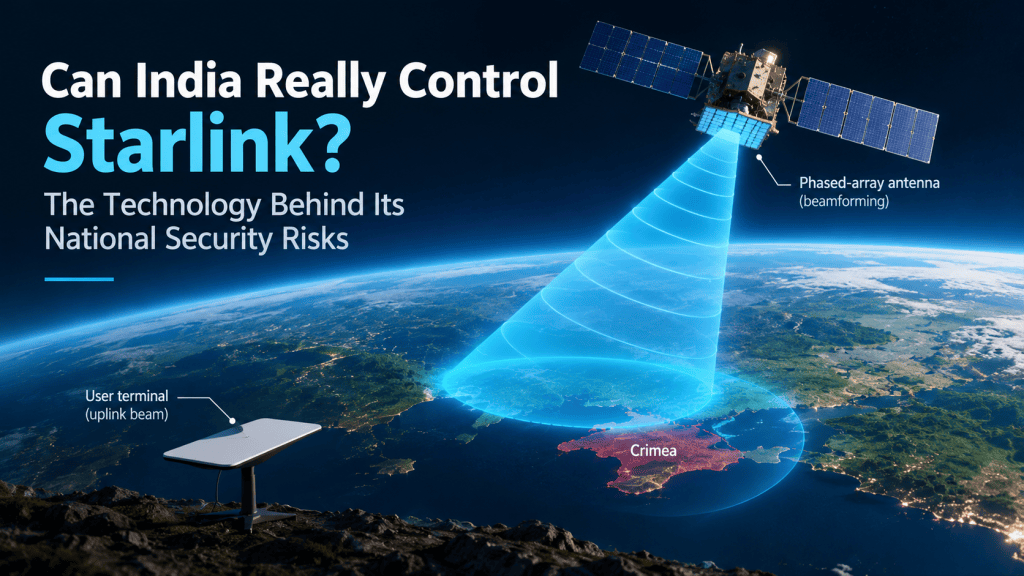
Can India Really Regulate Starlink? The Lessons from Ukraine
The Russia–Ukraine war has starkly exposed the strategic vulnerabilities that emerge when modern nations rely on private, foreign-controlled satellite constellations for critical national security and military communications. While commercial Low-Earth Orbit (LEO) networks like Starlink proved indispensable in keeping Ukrainian defense forces and civilian infrastructure connected following the systematic destruction of legacy terrestrial communications, the…
-

Starlink, OneWeb or Jio? Are we asking the right questions?
The debate over satellite internet in India should not be just about Elon Musk, Mukesh Ambani, spectrum auctions, or national security. It should be about building an Indian satellite communications industry. As a firmware engineer working on satellite hardware and digital processing architectures with one of the leading aerospace companies, I look at these networks…
-
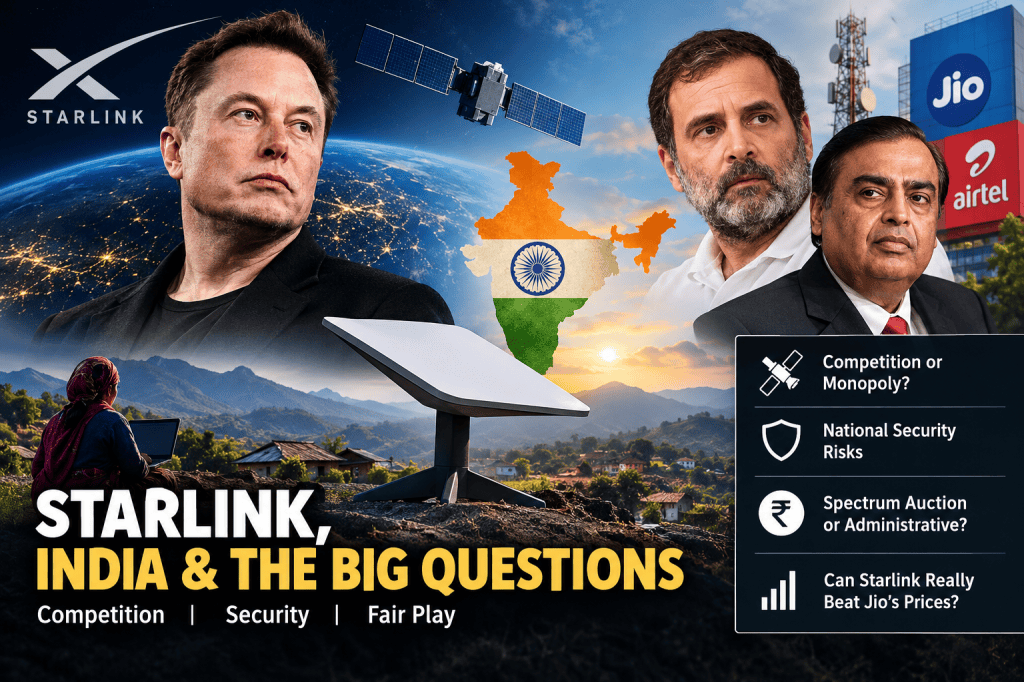
Starlink, Elon Musk and the Indian Market: What Is He Really Fighting For?
Elon Musk is trying to bully his way into the Indian market. Now, as he accuses powerful Indian business interests of obstructing Starlink’s entry, he has found an immediate ally in Rahul Gandhi. Musk has publicly insinuated that Mukesh Ambani, chairman of Reliance Industries, wields undue influence over the Indian government. Gandhi, who has long…
-
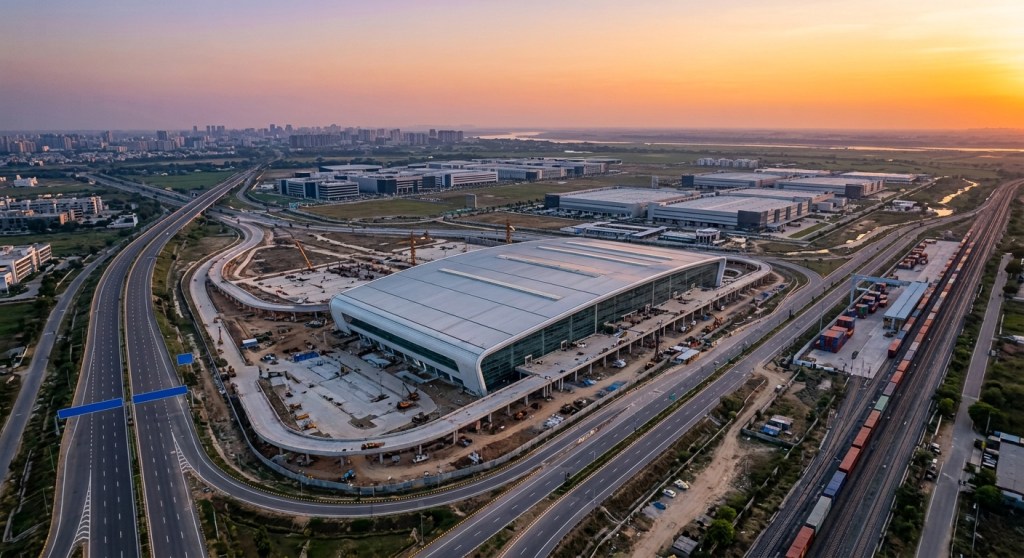
Is Uttar Pradesh Finally Catching Up?
India missed the Industrial Revolution. That sentence is almost too simple for the history it tries to contain. Britain industrialised first, followed by parts of Europe, the United States and eventually Japan. India, by contrast, entered the modern age largely as a colonised, agrarian economy. The consequences were enormous. Industrialisation did not merely produce factories.…
-

The Monroe Doctrine of the East: How India Quietly Became a Global Utility Power
For years, India was described as a balancing power—important but cautious, large but reactive, managing the world rather than shaping it. That description is now obsolete. By 2026, India has crossed a strategic threshold that many analysts still underestimate. Without declaring a doctrine, announcing red lines, or issuing ultimatums, New Delhi has executed something far…
-

History’s Deadliest Déjà Vu: When Pakistan’s Military Turns the Battlefield on Itself
After Operation Sindoor in May 2025, a striking claim began circulating across social media: Pakistan may have accidentally shot down one of its own aircraft amid the chaos. Was it confirmed? No.Was it denied convincingly? Also no. And that uncertainty is precisely the point. Because even the plausibility of such a blunder felt eerily familiar.…
-

India’s Biggest Risk Isn’t Pakistan — It’s Strategic Complacency
India is rising. Few serious observers dispute that. Economic growth has accelerated, infrastructure has expanded, internal security has improved, and India’s global posture is more confident than at any point since Independence. India today speaks with greater assurance in global forums, absorbs external pressure with less anxiety, and acts with a clearer sense of national…
-

Facts vs Myths: Why Balochistan’s Struggle Is Not Bangladesh 1971
Every time violence spikes in Balochistan, the same slogan reappears: “1971 is repeating.”“Pakistan will lose another wing.”“Bangladesh 2.0.” It spreads like wildfire — emotionally satisfying, historically lazy, strategically hollow. Let’s be blunt. If you think Balochistan today is East Pakistan in 1971, you are not analyzing geopolitics. You are romanticizing collapse. And collapse does not…

