
War is a tragic and undeniable reality of human existence. Even a single death in the name of conflict is appalling, yet wars have persisted throughout history and will likely continue as long as humans exist, driven by territorial disputes, ideological differences, economic rivalries, and more. While the loss of life is heartbreaking, conflicts often spark technological leaps as nations race to gain an edge. In my book, The Seven I’s of Modi’s India: Through the Eyes of an NRI, published earlier this year, I explored one such “I”—innovation—and raised a pressing question: If World War II and the Cold War propelled the United States, the Soviet Union, and Europe onto a high-speed train of innovation, why didn’t India’s wars with China and Pakistan in 1947, 1962, 1965, and 1971 do the same? Why, despite producing 1.5 million engineers annually, does India still procure Rafale jets from France? Why are we debating on national television whether to buy F-35s from the U.S. or Su-57s from Russia?
Discover the book “The seven ‘I’s of Modi’s India: Through the eyes of an NRI”
Now, in 2025, I see a shift unfolding in India, vividly playing out in the public domain. The drone race—a surge in the development, deployment, and discussion of unmanned aerial vehicles (UAVs)—is igniting excitement. I’m not suggesting drones emerged only after May 10, 2025, when the India-Pakistan conflict peaked. Rather, this race has burst into the spotlight, with the common man in India not just aware but eager to contribute. Imagine a young engineer in Bengaluru sketching drone designs, or a retiree in Delhi investing in defense stocks—India is buzzing! This blog post explores this phenomenon, the role of policy shifts since 2014, public involvement via stock trends, and the drones used by India and Pakistan in the recent conflict. While India still leans on foreign tech, indigenous efforts are accelerating, hinting at a new dawn for innovation.
The Drone Race
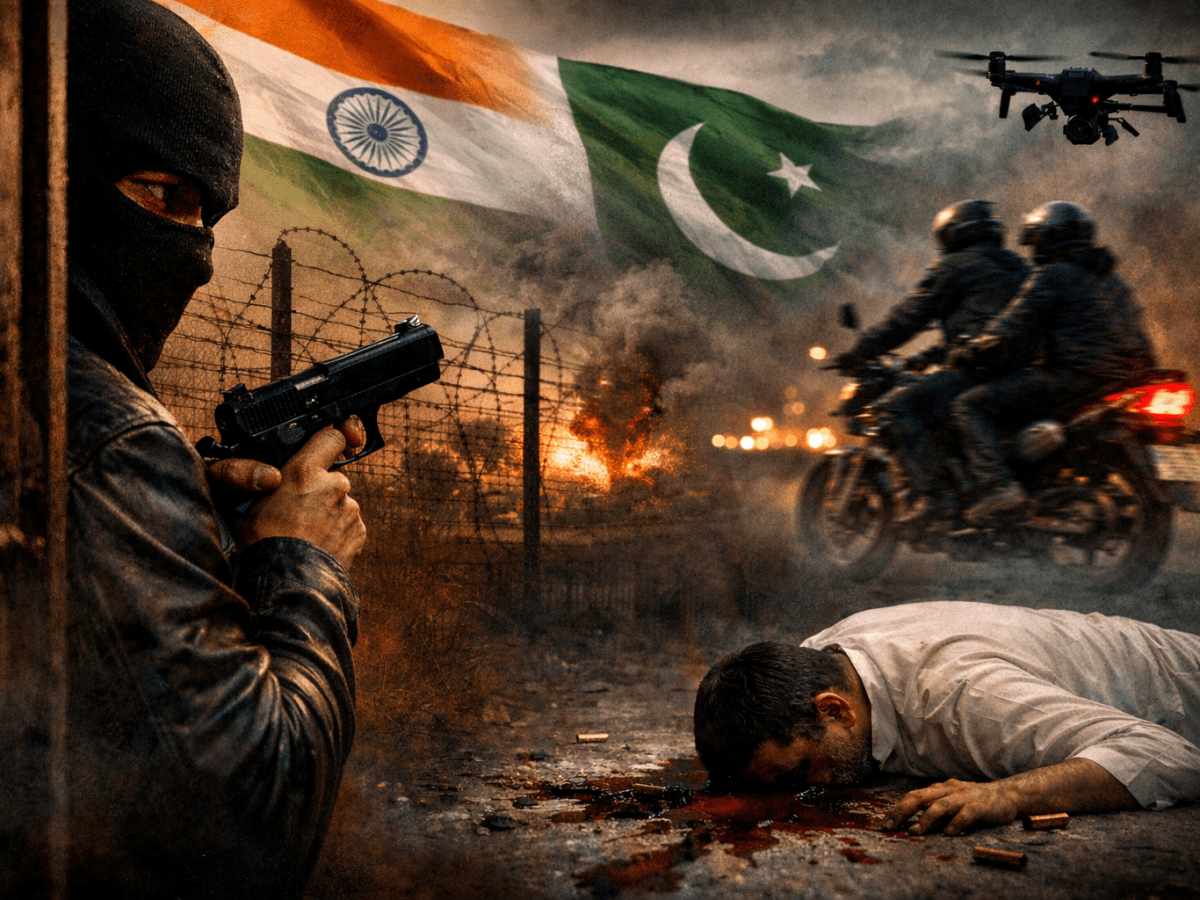
On April 22, 2025, a terror attack in Pahalgam, Indian-controlled Kashmir, claimed 26 lives, igniting outrage. India launched Operation Sindoor, targeting terrorist infrastructure in Pakistan and Pakistan-administered Kashmir. Pakistan retaliated, and by May 10, 2025, both sides unleashed drones in a clash that lit up the skies—surveillance drones buzzing, strike UAVs diving, a modern battlefield unlike any before. This conflict marked South Asia’s first large-scale drone war, thrusting the “drone race” into India’s public consciousness.
Drones aren’t new—India’s DRDO began the Nishant UAV in the 1990s—but the May 2025 clash brought them to prime time. News channels, X posts, and chai stall chats buzz with UAVs. The common man is engaged: students pitch drone ideas, engineers tinker in garages, and investors bet on tech firms. Unlike past wars, this race feels different—accessible, urgent, and alive.
Policy Shifts: From License Raj to Privatization Push
Before 1991, the License Raj shackled private players, requiring endless permits for defense and tech ventures, stifling innovation. The 1991 reforms cracked open the door, but progress was slow. Since 2014, the Modi government’s “Make in India” and Innovations for Defence Excellence (iDEX) initiatives and the ADITI Push
The Innovations for Defence Excellence (iDEX) initiative, launched in 2018 under the Ministry of Defence, aims to promote innovation by engaging startups, MSMEs, and individual innovators. It offers grants, funding support, and mentorship through the Defence Innovation Organisation (DIO). By 2025, over 250 startups had been onboarded, with more than 100 products in various stages of development and deployment.
iDEX played a pivotal role in shaping India’s indigenous drone ecosystem. Several key drones—like the ALS-50 by Kalyani Strategic Systems and the Switch UAV by IdeaForge—were supported or scaled through iDEX partnerships. These drones were deployed in Operation Sindoor for tactical strikes and surveillance, demonstrating the program’s real-world impact. Moreover, anti-drone solutions developed under iDEX, such as those tested by Zen Technologies, were crucial in neutralizing low-flying threats during the conflict.
Also read: India’s Defense Dilemma: The High Cost of Staying Behind in the Fifth-Generation Jet Race
Complementing iDEX, the Acing Development of Innovative Technologies with iDEX (ADITI) scheme was launched in 2023 to bridge the last-mile R&D-to-deployment gap in defense tech. ADITI targets early-stage ideas, especially those solving specific problem statements issued by the armed forces. With up to ₹3 crore in grants per project, ADITI encourages disruptive technologies—like AI-driven swarm drones, autonomous navigation systems, and stealth materials. Several ADITI-backed UAV concepts are now undergoing user trials, with the expectation that many will transition to production by late 2025.
Together, iDEX and ADITI represent a major policy thrust—moving India from a buyer to a builder of battlefield technologies, especially UAVs, and transforming wars into opportunities for self-reliant innovation. have turbocharged change, easing rules and boosting privatization. The Drone Rules 2021 simplified approvals, spurring over 200 drone startups.
Also read: Rafale Deal sums up India’s journey from “Marut” to “Tejas”
Critics slam this privatization push, fearing it favors big corporations or risks security. Yet, it’s undeniable: private firms now drive drone tech, from surveillance to strikes. This shift has empowered entrepreneurs and engineers, fueling the drone race and bringing the common man into the fold—a stark contrast to the state-heavy days before 2014.
The Common Man’s Stake: Stock Market Trends
A vivid sign of public fervor is the stock market. Since the May 2025 conflict, defense and drone tech stocks have soared, reflecting the common man’s belief in India’s potential. Note: Exact figures vary; as of June 1, 2025, trends suggest the following illustrative rises:
- IdeaForge: +30-40%
Known for drones like Netra V4 and Switch UAV, IdeaForge’s technologies were reportedly deployed in Operation Sindoor for tactical surveillance and real-time battlefield assessment. - Bharat Forge: +20-25%
Through its subsidiary Kalyani Strategic Systems, Bharat Forge has contributed to India’s drone ecosystem with the ALS-50 loitering munition, which was reportedly used for precision strikes during Operation Sindoor. - Astra Microwave: +15-20%
Specializes in RF and microwave components used in UAV guidance and communication systems. Their tech was embedded in several indigenous drones deployed for electronic warfare support. - Zen Technologies: +25-35%
While Zen is known for simulators, it has ventured into anti-drone systems, which were tested and partially deployed during Operation Sindoor for neutralizing low-flying threats. - Taneja Aerospace: +10-15%
Provided UAV airframes and maintenance support for drone fleets. Their upgraded lightweight platforms helped extend mission range during the skirmishes.
Before May 7, 2025, these stocks grew steadily; post-conflict, the surge shows everyday investors—teachers, shopkeepers, retirees—backing the drone race, a tangible sign of public involvement.
Drones in the India-Pakistan Conflict
The May 2025 clash turned drones into stars—used for surveillance, strikes, and defense testing. Both India and Pakistan leaned on varied arsenals, blending imported and homegrown tech. SIGINT (signals intelligence) intercepts enemy comms for strategic edge, a key tactic for both. A few highlights:
India:
- Indigenous: Netra, JM-1 LM, ALS-250, Switch, IG VTOL, Ajeet Eagle, IG FPV, TAPAS-BH-201
- Imported: Harop, Heron, SkyStriker, MQ-9B SeaGuardian
Pakistan:
- Indigenous: Burraq, Shahpar I & II, Uqab series, Jasoos II
- Imported: Bayraktar TB2, Wing Loong II, CH-4, Falco
Analysis: Innovation and Dependency
India’s mix of homegrown (Netra, Switch) and imported (Harop, MQ-9B) drones shows growth but highlights reliance on Israel and the U.S. Indigenous efforts are growing, yet advanced tech gaps persist. Pakistan, too, leans on China and Turkey, but its supply chains may be vulnerable in prolonged conflicts. The spark has been lit: with iDEX and 200+ startups, India plans to spend an estimated $470 million on UAVs in the next 12-24 months.
Conclusion: Join India’s Drone Race
War’s toll is tragic, yet its reality persists. The May 2025 India-Pakistan clash, with drones lighting up Kashmir’s skies, marks a turning point. Policy shifts since 2014, from License Raj to privatization, have unleashed startups and talent. The common man—investing in stocks, debating on X, ideating designs—is driving the drone race. The innovation train is finally gathering steam. It’s time for India to fly, not crawl.
This article builds upon ideas from the author’s book, The Seven I’s of Modi’s India: Through the Eyes of an NRI.
Discover the book “The seven ‘I’s of Modi’s India: Through the eyes of an NRI”
Thanks for reading. Please do share the article and do let me know your thoughts via comments.
Also read:









 Infinite Sea of Opportunities
Leave a comment