
[Spoiler Alert – The post has spoilers from the movie. If you would like the read the review without the spoilers, here is one – Dhurandhar—The 3.5-Hour Epic That is Filling Theaters in the UK: A Non-Spoiler Review]
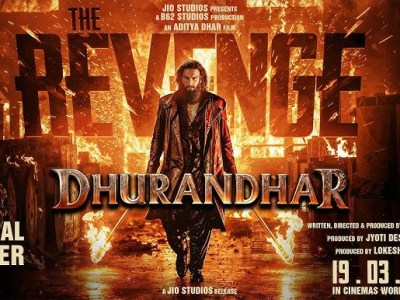
Why has the film Dhurandhar generated such an unprecedented hue and cry? The reaction is a major cinematic event in itself, but the criticism is misguided. It’s certainly not because it “bashes Pakistan”—there are at least a dozen films and series with far more gory violence and far more generic Pakistan-bashing on my fingertips. The list is extremely long.
So what is the reason a particular section in India is so upset with the movie and is trying hard to sink it?
The real backlash stems from the film’s audacity to ground its narrative in verifiable, yet politically inconvenient, geopolitical facts and, more dangerously, tie those facts directly to allegations of domestic political malpractice.
Here are the two pillars of controversy that have ignited the political firestorm:
1. The Baloch Question: Exposing a New Geo-Political Faultline
For the first time, a mainstream Hindi movie did not use Pakistan as a generic villain, but specifically brought the Baloch community and their complex political scenario into the limelight with seriousness and detail.
The narrative backbone of Dhurandhar revolves around the real-life figures of Rehman Baloch (Dakait), his successor Uzair Baloch, and the socio-political heart of their power: Lyari, Karachi—often called the “Mother of Karachi” and a documented hub for crime and gang wars. If you look beyond the spy plot, the movie is a dramatisation of life in Lyari: the gangs, the crime, and the entrenched political patronage, drawing on facts that are extensively documented in media reports about the Lyari Gang Wars.
The icing on the cake is the chilling cinematic efficiency of a particular scene:
When Uzair Baloch asks Major Iqbal (ISI) why he can’t procure sophisticated American and Russian weapons directly from the Baloch Liberation Army, Iqbal replies, “They have been fighting us for seventy years for their liberation from us, why will they sell sophisticated American and Russian made weapons to us?” This is immediately followed by a side punch about the ISI killing family members of vocal Baloch activists in the name of “interrogation.”
This one dialogue alone achieves several explosive goals:
- Acknowledges Atrocities: It gives air to the often-suppressed topic of the Baloch liberation struggle against the Pakistani state and the atrocities committed against the Baloch people under the guise of security operations.
- Exposes Exploitation: It exposes the Baloch gangs (like the one led by Rehman Dakait) that betrayed their own community for power and money—the very criminal element the ISI utilized for its operations.
- Hints at ISI Strategy: It hints at how the ISI circumvented traditional military channels to procure weapons for terrorism against India by relying on black market channels and local gangs. Reports of ISI-linked arms rackets supplying sophisticated weapons to Indian gangs further underscore this documented history of arms trafficking.
The movie leverages this geopolitical irony and historical conflict to create a powerful, fact-based narrative hook that forces the audience to engage with a level of realism previously unseen in Bollywood.
Now, if you were a Pakistan sympathizer, you would desperately want this movie to fail. Why? Because watching it encourages the audience to cross-check the facts and research the history of the Baloch Liberation movement. That level of fact-checking and public awareness is simply not good for Pakistan’s image or its state narrative. The movie essentially provides a public clue to a hidden, inconvenient history.
Also read: BLA is Getting Bolder and Fighting Harder for Baloch Independence Than Ever Before!
Also read: Nawab Bugti: The forgotten Baloch
2. Demonetization’s Hidden Rationale: The FICN Conspiracy and Political Compromise
The second, and perhaps most politically volatile, reason for the backlash is the film’s narrative linking the national security threat of Fake Indian Currency Notes (FICN) to decades of domestic political corruption.
Everyone is aware of the famous line, “Bleed India with a Thousand Cuts,” adopted by Pakistan after the 1971 war to define its strategy of protracted, low-intensity conflict. The circulation of high-quality FICN was one of the most critical economic cuts designed to destabilize the Indian monetary system.
- The Historical Truth: The FICN threat was no secret. Intelligence reports dating back to the UPA era (pre-2014) confirmed that the quality of the fake currency was so high it could only have been produced at a sovereign government’s printing press—Pakistan’s state machinery was literally weaponized for economic sabotage.
- The Movie’s Explosive Leap: While dozens of movies have touched on Demonetization’s social impact, Dhurandhar is unique because it is the first to explore its core national security rationale. More explosively, the film doesn’t just mention the fake currency; it provides a highly dramatic hint as to how Pakistan was able to replicate the security features so perfectly. The film strongly implies that a Indian politicial leader may have shared original printing plates or critical security feature specifications with the ISI in return for favors—a charge of corruption at its highest level that directly connects an international terror threat to domestic political malpractice.
Now if you were an INDI Alliance supporter, you would not want people to watch this film. Why? Because the movie compels viewers to research the FICN menace and the genuine connection between fake currency and the Demonetization decision. The same Demonetization that, as the critique often goes, made certain leaders bankrupt and walk the streets while simultaneously addressing a critical national security threat. The film’s narrative structure forces them to question their loyalty.
The irony is stark: While critics are furious over the film’s “politics,” the political party implied in the corruption has not filed any defamation case against the movie makers for these explosive, implied accusations. This leaves supporters of the previous government with a simple, direct question: Is the narrative of compromise true, and if not, why is the film not being legally challenged? The film forces blind party supporters to confront the possibility that their political loyalties may have been prioritized over national security.
Also read: The Cash Nexus: Criminals and Politics
Also read: Modi gov’s surgical strike(s) on Black Money
🎯 The Humiliation of the System
In essence, the hue and cry is less about “bashing Pakistan” and more about the film’s audacity to connect documented geopolitical threats with undocumented but strongly suspected domestic political failures and corruption—a dramatic narrative choice that validates the historical critique leveled by the current ruling party against the previous one.
The film suggests an environment of systemic rot where national security decisions were delayed, and, worse, where top political figures were compromised. The narrative suggests the intelligence apparatus had to wait for a “stronger, more patriotic leader” to take action on terror-funding operations because the system itself was corrupted from within.
By focusing on these two explosive, politically charged points, Dhurandhar has done what few mainstream films dare to do: it has used a spy thriller to frame a damning political argument, which is why a certain section of the society finds it not just offensive, but politically intolerable.
Thanks for reading!
Also read:






 Infinite Sea of Opportunities
Leave a comment