
For three decades, the Indian film industry was governed by a set of “unbreakable” rules. We were told that the audience had a short attention span, that certain faces were mandatory for success, and that “masala” was the only language the masses understood.
Then came December 2025. Then came Dhurandhar.
Aditya Dhar’s 3.5-hour geopolitical epic hasn’t just crossed ₹750 crore worldwide in record time; it has acted as a post-mortem for the “Old Bollywood” formula. It proved that for years, we weren’t being “given what we want”—we were being fed garbage because the ecosystem was mediocre and below par.
1. The Myth: “Songs are Needed to Fill a Void”
In traditional Bollywood, songs are often “void fillers”—artificial injections of emotion or energy designed to mask a weak, hollow screenplay. If the romance lacks chemistry, they add a song. If the tension drops, they add a dance.
Dhurandhar crushes this crutch. In its massive 3.5-hour runtime, only one song (“Gehra Hua”) actually pauses the screen. There was no “void” to fill because the story itself was already overflowing with pressure. Instead, the music functions as a narrative engine:
- The Political Rise: When “Lutt Le Gaya” plays, it provides the rhythmic pulse for the chilling moment Rehman Dakait (Akshaye Khanna) steps onto the stage. As he is announced as the candidate for the PPP, the song underscores his transition from a street thug to a state-sanctioned power player.
- The “Monica” Chase: One of the most electrifying sequences is the police raid where Hamza (Ranveer Singh) must save Yalina. Instead of a generic action score, we get a dark, trap-infused remix of “Monica O My Darling” (Run Down the City). The contrast between the retro ad-libs and the brutal bike chase creates a tension that a standard “action BGM” could never achieve.
- Entering the Abyss: The high-octane “Ez-Ez” (Hanumankind x Diljit Dosanjh) kicks in as Donga (Naveen Kaushik) introduces Hamza to the claustrophobic reality of Lyari. The track isn’t a song; it’s a war horn.
There are several other key scenes where the music changes the entire psychological experience—from “Hawa Hawa” announcing Sanjay Dutt’s swaggering entry to the eerie use of “Ramba Ho” during a chaotic shootout. Let me know in the comments if you would like me to list them all. While other 2-hour movies feel like an eternity because of forced dance numbers, Dhurandhar’s 212 minutes fly by like seconds. It has redefined the “musical” in India as something that aids the story, not something that fills a hole in it.
2. The Myth: “Item Songs are Commercial Oxygen”
Perhaps the most satisfying win for Dhurandhar is its total rejection of the “Item Song” as a cheap marketing gimmick. For years, we’ve seen so-called “feminist” icons in Bollywood preach empowerment while simultaneously normalizing songs that used women as skin-baring props to lure male viewers.
This was hypocrisy at its best. Dhurandhar has absolutely no conventional item songs. Even the high-energy track “Shararat” doesn’t qualify as one. Why? Because it is woven into the narrative fabric of the wedding between Hamza and Yalina.
Crucially, it lacks the exploitative gaze: those famous “30 seconds of hook steps” are there to reflect a celebration, but for the rest of the song, the camera stays on the characters and the plot. The “performers” aren’t just there to flaunt skin and disappear; they are part of the world-building. It proved that you don’t need to objectify women to create a viral “party anthem”; you just need to write better roles and integrate the music with the soul of the film.
3. The Myth: “Only Khans and Sex Sell”
The safest argument in the trade was that a ₹500-crore domestic hit required a “Khan” or overt sexualization to ensure “repeat value.” Dhurandhar—an intense, A-rated political thriller with zero nudity and zero “bold” scenes—has shattered this glass ceiling.
I saw the movie for the second time this Friday in the UK. Even with the massive global release of James Cameron’s Avatar: Fire and Ash, the theatre was housefull. The fact that a 3.5-hour Indian spy epic is holding its ground against the biggest Hollywood franchise in the world proves that the audience’s “lust” has fundamentally shifted. They are no longer looking for cheap skin-show; they are lusting for high-IQ content and raw realism. The success of Dhurandhar confirms that a movie can be “Adult” because of its intellectual depth and visceral stakes, not because of cheap titillation.
4. The Myth: “Stardom Guarantees Cinema”
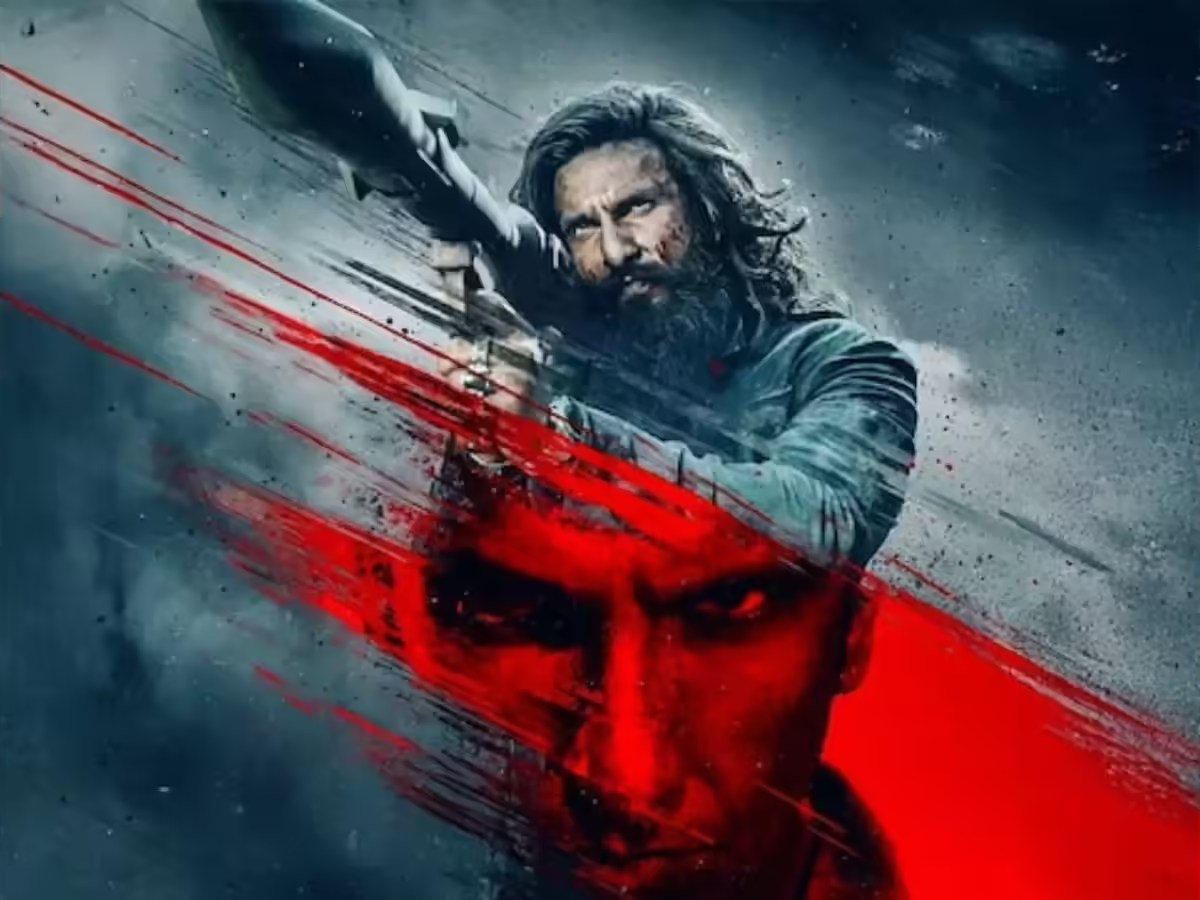
In the “Old Bollywood” era, poor stories and mediocre direction still made “Superstars” because the audience paid for the brand, not the film. Dhurandhar did the exact opposite. In its entire runtime, I did not see a single superstar. I saw Ranveer Singh surrender his ego to become a shadow in Lyari. I saw Akshaye Khanna (the “Apex Predator”) redefine the antagonist as a calm, terrifying force of nature. I saw Sanjay Dutt play a “Jinn” with more nuance than his last ten “mass” roles combined. This is a victory of Ensemble Excellence over Ego. The era where you could sell a ticket just by putting a “Big Name” on the poster is officially buried.
5. The Myth: “We Show What the Audience Wants”
There is a famous narrative, often echoed by the industry’s elite, that the public only wants “escapist cinema.” Dhurandhar exposed this as a self-serving lie. The reality is that people watch whatever is shown, provided it is world-class. For decades, genuine artists were suffocated by an ecosystem controlled by underworld-linked finances and vote-bank-hungry politicians who preferred a “docile” audience. Dhar didn’t pander; he challenged the viewer with 212 minutes of complex, unorthodox storytelling. He bet on the audience’s intelligence, and the audience rewarded him by turning Lyari into the most talked-about location in India.
Case Study: The Karachi/Lyari Connection
The true genius of Dhurandhar lies in its refusal to blink. Unlike previous “Spy vs. Spy” thrillers that relied on shallow caricatures and fictionalized tropes, this film used history as a weapon. By weaving in real-life figures—the relentless SP Chaudhary Aslam and the brutal Rehman Dakait/Uzair Baloch—the narrative respected the gravity of the era while creating a modern sensation.
It did not seek to “sanitize” the past. Predictably, some established circles are offended. They are uncomfortable because the film refused to cover up the rot; it did not manipulate the timeline or the truth to fit the “politically correct” or “industry-standard” norms that have governed Bollywood for decades.
This is exactly what “New India” is demanding: content that refuses to manipulate the audience. The viewer today is not looking for a “safe” version of the truth; they want content that informs as much as it entertains. The massive success of this film proves that the Indian public is finally ready to engage with the complex, uncomfortable realities of “Gray Zone” warfare—the shadow struggle that has defined our regional security from 2004 to 2025.
Final Thoughts: The Road to March 2026
The success of Dhurandhar is a victory for the “Silent Majority”—the audience that was tired of being underestimated by the Mumbai-Dubai-Delhi elite.
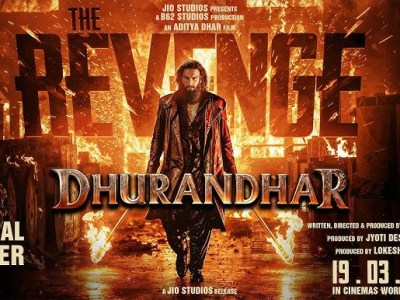
With the sequel (Dhurandhar: Part 2 – Revenge) confirmed for March 19, 2026, the industry has a very short window to learn its lessons. If they continue to rely on the “Khan, Sex, and Item Song” formula, they aren’t just being outdated—they are becoming irrelevant. The “Dhurandhar Revolution” has begun.
Thank you for reading! If you enjoyed reading the piece, please subscribe to my blog for the upcoming posts.
Also read:
- Bollywood & its Feminists
- Is Nepotism in Bollywood a genuine problem or a propaganda to hide something?
- The Sham of Indian Feminism: Absent from Cricket’s Triumph, Obsessed with Selective Outrage
- The Mafia and the Propaganda; all in the name of Sushant Singh Rajput
- The Sacred Games we were always a part of








 Infinite Sea of Opportunities
Leave a comment