
On January 22, 2026, one press release from Dhaka did what three decades of cricketing struggle never could: it pushed Bangladesh cricket to the brink of self-destruction.
By officially boycotting the 2026 T20 World Cup in India, the Bangladesh Cricket Board (BCB)—under pressure from the interim government’s hardline sports advisor—did not make a political statement. It made a commercial exit.
While official rhetoric speaks of “national pride” and “security concerns,” the outcome is brutally simple: Bangladesh has stepped out of the global cricket economy and locked the door from the inside.
This isn’t defiance. It’s self-sanctioning.
I. The $27 Million Black Hole: A Financial Autopsy
Cricket in Bangladesh is not self-sustaining. It survives on ICC distributions and the gravitational pull of the Indian market. The World Cup boycott collapses both pillars at once.
The Immediate Hit
The BCB faces an estimated $27 million loss (≈ BDT 325 crore)—nearly 60% of its projected annual income. This includes:
- ICC participation fees
- Revenue-share from broadcast deals
- Match-day and sponsorship guarantees tied to marquee events
For a board already struggling with reserve management and delayed payments, this is not a temporary setback. It is a balance-sheet crisis.
India: The Oxygen Supply Cut Off
In modern cricket, India is the economic sun. Everything else orbits around it.
Bangladesh was scheduled to host India for a full bilateral series in August–September 2026. After the boycott, the BCCI has indefinitely postponed the tour.
Why this matters:
- One home series vs India earns more than 10 bilateral series combined against Ireland, Zimbabwe, or even the West Indies.
- Indian broadcasters, sponsors, and advertisers drive Asian cricket’s valuation.
No India tour means no serious revenue.
The Mustafizur Signal
The crisis accelerated after the BCCI instructed KKR to release Mustafizur Rahman early. That single act sent a clear message: Indian cricket capital is done engaging. Bangladesh simply failed to understand the difference between IPL and an ICC tournament. Its absolutely Indian prerogative to bring such directives in tournaments that are local to India (it does not matter if there are international players, what matters is its run by BCCI and not ICC).
For the foreseeable future, no major Indian franchise or sponsor will touch Bangladeshi players.
The Long-Term ICC Risk
The ICC’s 2024–27 cycle operates on Participation Agreements. Breach them, and future allocations become negotiable.
Bangladesh currently holds 4.46% of ICC revenue. The 2028–31 cycle could see that share quietly reduced—without headlines, without appeals.
The result? Empty stadiums, unpaid staff, and boards struggling to keep floodlights on.
II. The Death of Talent: A Generation Pushed Into Exile
Boards lose money. Players lose careers.
The BPL Collapse
The Bangladesh Premier League—already fragile—is now commercially paralysed.
- Indian sponsors have exited
- IPL broadcasts are restricted domestically
- Senior players like Najmul Hossain Shanto and Taskin Ahmed openly clashed with the BCB after being told they weren’t “entitled” to compensation
Without foreign stars, sponsors, or broadcast value, the BPL no longer functions as a development bridge.
The Vanishing Shop Window
For players like Litton Das or Rishad Hossain, a T20 World Cup is a global audition.
No World Cup means:
- No Big Bash
- No ILT20
- No Hundred contracts
In T20 cricket, visibility is currency. Bangladesh players are now invisible.
The Brain Drain Begins
Quietly, younger players are exploring alternatives:
- Kolpak-style pathways
- USA cricket eligibility
- European associate leagues
When a 19-year-old in Dhaka stops dreaming of Mirpur and starts dreaming of a passport, the system is already broken.
Grassroots: Where the Damage Will Be Permanent
The real casualties will be U-15 and U-19 programs—the same pipeline that produced the 2020 U-19 World Cup champions.
With a 60% revenue hit:
- Academies close
- Coaches leave for UAE and USA
- The talent pipeline dries up within three years
Bangladesh will be left with an aging senior squad—and no replacements.
III. Counter-Arguments—and Why They Don’t Hold
“This Is About National Pride”
Pride doesn’t pay contracts, fund academies, or keep leagues alive.
In 2026, soft power is economic power. You don’t weaken a neighbour by exiting the market—you weaken yourself.
“Security Concerns Are Legitimate”
If India is unsafe in 2026, then Bangladesh has already disqualified itself from co-hosting the 2031 ODI World Cup.
You cannot claim insecurity today and expect hosting rights tomorrow.
“The ICC Won’t Punish Bangladesh”
Correct—there will be no press release.
Punishment will be quiet:
- fewer marquee fixtures
- neutral venues becoming default
- reduced lobbying power
- diminished future revenue shares
In global sports governance, silence is the sanction.
“Bangladesh Can Rely on Other Markets”
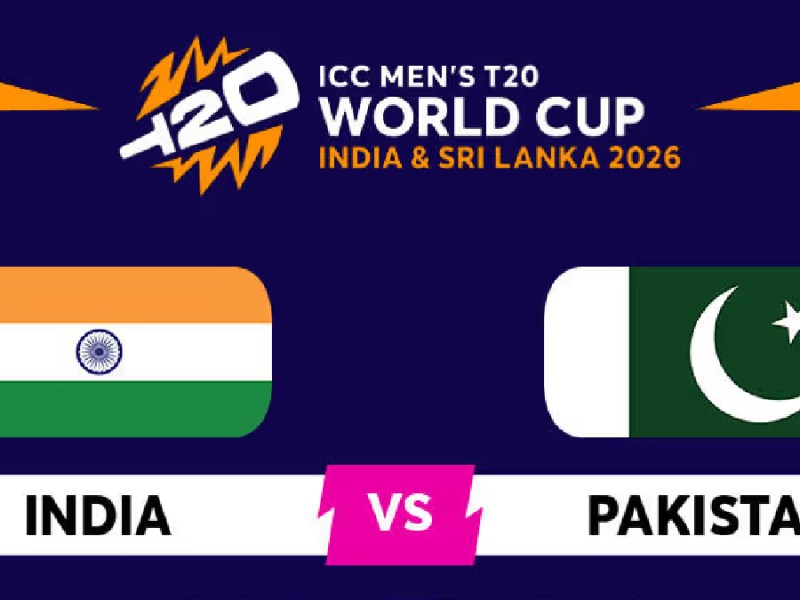
There is no alternative market. The irony is that the same Pakistan that voted in favor of Bangladesh and supporting their move of boycotting the world cup, tries extremely hard to get matches with India. I am not just saying it, it is backed by the data. have a look:
| Metric | Ind vs. Pak (Single Match) | Pak vs. Others (Avg) | Ind vs. Others (Marquee Series) |
| Peak Reach | 206 Million | 20 Million | 230 Million |
| Total Minutes | 26 Billion | 1.8 Billion | 65 Billion (Series Total) |
| Digital Peak | 60.2 Million | 4 Million | 61 Million |
| Monetization | High-Premium/Short-Term | Loss-Making / Low | High-Stable/Long-Term |
Let alone Bangladesh, Pakistan needs matches with India to keep itself afloat. India does not need either Pakistan or Bangladesh to keep itself afloat but both Pakistan and Bangladesh need India.
No country replaces India’s broadcast value. Not England. Not Australia. Not the Gulf leagues.
This isn’t ideology—it’s arithmetic. Even Pakistan—despite political hostility—understands this reality.
IV. The Verdict: Self-Demotion in Slow Motion
Bangladesh won’t collapse overnight. The decay will be delayed—and therefore more dangerous:
- 2026–27: Competitive stagnation
- 2028: Reduced ICC leverage
- 2029–30: Youth gap becomes visible
- 2031: Hosting credibility questioned
While Afghanistan rises through grit and the Netherlands builds professionalism, Bangladesh risks becoming an Associate nation in everything but name.
Conclusion: Leaving the Table
The tragedy isn’t missing a tournament. It’s missing the moment.
Bangladesh cricket was finally compounding—competitive, commercially viable, globally relevant. This boycott interrupts that growth at the worst possible time.
The Tigers are no longer being led by cricketers, but by bureaucrats who mistake symbolism for strategy.
And in modern cricket, once you leave the table, someone else is always ready to take your seat.
Thanks for reading.
Also read:
- Cricket: A blessing in disguise
- The politics of India vs Pakistan Cricket
- The Afghan effect in ICC Cricket WorldCup 2023
- Champions by chance? India wins T20 World Cup 2024 Edition!
- T20 World Cup Final! An outstanding treat for the audience




 Infinite Sea of Opportunities
Leave a comment