
“Karma is a b**ch.”
Everyone says it casually.
But when history actually loops back and slams into a nation’s own foundations, the question changes from if to why.
Right now, Pakistan is living inside that question.
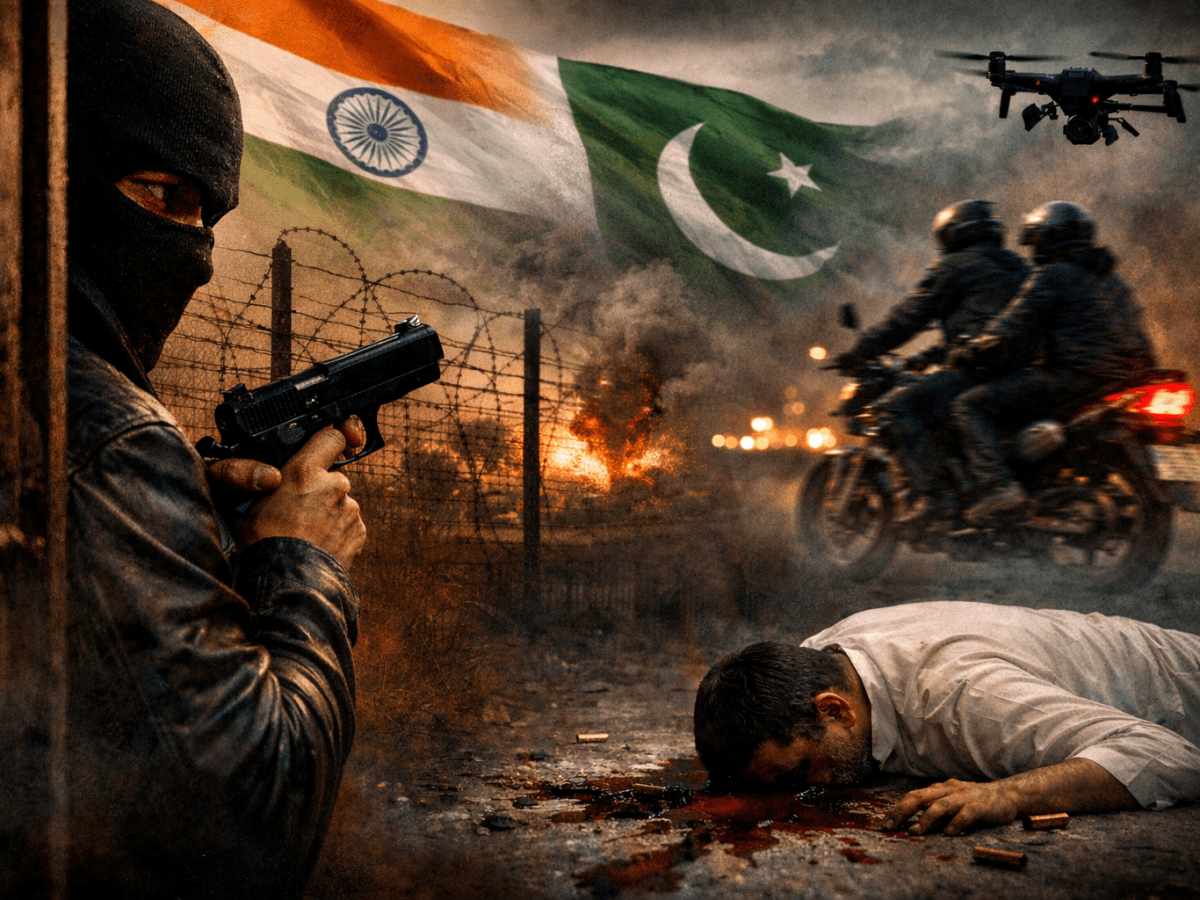
The country is witnessing some of the deadliest terror waves it has seen in decades. Suicide bombings. Mosque attacks. Police convoys ambushed. Entire districts slipping into fear. From Khyber Pakhtunkhwa to Balochistan, the map looks less like a state in control and more like a state reacting.
It feels like everyone has turned on Pakistan. Of course it blames India for most of its troubles simply because it is easy to say. But the reality is far from it.
To understand what is happening and why, you have to draw a circle — one that begins in 1893.
1893: The Durand Line – The First Fault
In 1893, the British Raj drew the Durand Line, slicing through Pashtun tribal lands. Villages were split. Tribes were divided. Loyalty was fractured.
When Pakistan was created in 1947, Afghanistan refused to formally recognize this border. In fact, Afghanistan was the only country to oppose Pakistan’s entry into the United Nations.
The Pashtun question never disappeared.
It was frozen — not solved.
1947: The First Proxy – Kashmir
Barely months after its birth, Pakistan deployed Pashtun tribal fighters to invade Kashmir.
This wasn’t conventional warfare. It was irregular warfare — plausible deniability wrapped in tribal mobilization.
The invasion triggered:
- Maharaja Hari Singh signing the Instrument of Accession with India
- The first Indo-Pak war
- Permanent militarization of Kashmir
This moment was pivotal.
Pakistan discovered a doctrine that would shape its future:
Use non-state actors as strategic tools.
That template would be reused — repeatedly.
1980s: The Afghan Jihad – Infrastructure Is Built
Fast forward to the Cold War.
When the Soviet Union invaded Afghanistan in 1979, Pakistan became the frontline state for the US-backed jihad.
Training camps flourished — especially in FATA (Federally Administered Tribal Areas), the semi-autonomous Pashtun belt.
Money flowed.
Weapons flowed.
Ideology hardened.
Religious seminaries produced fighters.
These fighters became the Mujahideen.
By 1989, the Soviets withdrew. November 9, the Berlin Wall “The Iron Curtain” collapsed. December 3, 1989 Cold War Ended
Mission accomplished?
Not exactly.
The infrastructure remained:
- Training networks
- Smuggling routes
- Radicalized fighters
- Cross-border sanctuaries
Militancy had become institutionalized.
1989: Kashmir Reignites
After the Soviet withdrawal, thousands of battle-hardened fighters were suddenly without a battlefield.
Coincidentally, insurgency escalated in Kashmir.
Groups like Lashkar-e-Taiba and Jaish-e-Mohammed rose in prominence.
The Afghan template was repurposed.
Proxy warfare was cheaper than tank divisions.
Plausible deniability was safer than open conflict.
But ecosystems built on militancy do not stay contained.
They mutate.
Less than a month, January 19, 1990 became “the night of terror” when the slogans Ralive, Tsalive, ya Galive (Convert, Leave, or Die) ended in the largest Kashmiri Pandit Exodus.
The “Good Taliban” vs “Bad Taliban” Illusion
In the 1990s, the Afghan Taliban emerged from seminaries inside Pakistan.
They were largely Pashtun.
They were disciplined.
They were useful.
For Pakistan’s establishment, the Afghan Taliban were strategic depth against India.
Then came 9/11.
The United States invaded Afghanistan. Pakistan publicly joined the American war on terror — but internally, it tried to maintain a distinction:
Good Taliban: Fighting in Afghanistan
Bad Taliban: Fighting inside Pakistan
This was a dangerous illusion.
You cannot cultivate fire in your backyard and expect it to burn selectively.
2007: The Birth of TTP – Blowback Begins
Years of drone strikes, military operations, and anger inside FATA led to consolidation.
In 2007, various militant factions united under one banner:
Tehrik-e-Taliban Pakistan (TTP).
Their objective?
Not India.
Not NATO.
Pakistan itself.
They attacked:
- Military bases
- Mosques
- Schools
- The Army Public School in Peshawar (2014)
The buffer zone had become a battleground.
The proxy had turned predator.
2018: FATA Merged, But Not Healed
In 2018, Pakistan formally merged FATA into Khyber Pakhtunkhwa.
It was a historic move.
But decades of neglect, parallel governance, and militancy cannot be erased by legislation alone.
Political alienation remained.
Economic underdevelopment remained.
Resentment remained.
2021: Taliban Return — Strategic Miscalculation
When the US withdrew from Afghanistan in 2021 and the Taliban returned to power, many in Pakistan believed this was a strategic win.
A friendly government in Kabul.
A secured western flank.
Instead:
- TTP fighters regrouped in Afghanistan.
- Cross-border attacks surged.
- Kabul refused to fully crack down on TTP.
Pashtun solidarity complicated suppression.
The “asset” became leverage — but not Pakistan’s leverage.
Weapons Left Behind
When the US left Afghanistan, it left behind billions of dollars worth of equipment.
Those weapons didn’t vanish.
Many filtered into militant networks.
Some reports suggest these arms are now being used not only by TTP but also by groups like the BLA in Balochistan.
The region’s militant ecosystem has become interconnected.
What was once compartmentalized is now fluid.
The Bigger Picture: Strategic Overreach
For decades, Pakistan believed it could:
- Manage militants
- Redirect militancy outward
- Maintain strategic depth
- Control escalation
But militant ecosystems are not chess pieces.
They have ideology.
They have grievance.
They have their own ambitions.
The “good Taliban vs bad Taliban” doctrine was never sustainable.
You cannot draw moral borders inside armed radical movements.
Eventually, the lines blur.
Is This Karma?
That word is emotionally satisfying — but geopolitics is rarely mystical.
This is not cosmic punishment.
It is structural blowback.
When a state:
- Relies on irregular fighters
- Creates militant infrastructure
- Uses ideology as policy instrument
- Leaves border grievances unresolved
The consequences may not arrive immediately.
But they accumulate.
And when they arrive, they do not knock politely.
The Human Cost
The tragedy is this:
Ordinary Pakistanis are paying the price.
Shopkeepers.
Schoolchildren.
Police constables.
Worshippers inside mosques.
They did not design the strategy.
They did not write the doctrine.
But they live inside its consequences.
The Hard Truth
Pakistan is not collapsing tomorrow.
But it is facing a structural reckoning.
The same tribal belts once used as leverage are now volatility zones.
The same militant networks once considered strategic assets are now internal threats.
The same border that was manipulated for depth has become a pressure fault.
History did not repeat.
It completed a circle.
And when circles close, they rarely do so gently.



 Infinite Sea of Opportunities
Leave a comment