
A two weeks ceasefire was announced on April 8th and peace talks are going on in Islamabad, Pakistan. But these peace talks are unique in a way where one the major party to the war hasn’t joined the talks.
Why is Iran war happening in the first place? Who are the belligerents?
It was an Israeli war.
Israel ever since its independence has been fighting existential threat from its Muslim neighbors. The list is long, but a summary is as follows:
- 1948 War of Independence: Fought against the combined armies of Egypt, Jordan, Iraq, Syria, and Lebanon.
- 1967 Six-Day War: A preemptive strike against Egypt, Jordan, and Syria that redefined regional borders.
- 1973 Yom Kippur War: Surviving a massive surprise assault by Egypt and Syria.
- The Proxy Era: Decades of fighting the “Ring of Fire”—Hezbollah in Lebanon, Hamas in Gaza, and the Houthis in Yemen.
There was no Iran in these wars in the beginning.
Post 1970s the Sunni Muslim countries like Egypt, Saudi, Iraq, Syria the ones who shared borders with Israel realized they can’t win against Iran. So, they gave up.
Now comes Shia Iran to place itself as a leader of the Muslim world by taking on its own shoulders the plight of Palestine. But it did not wage a conventional war with Israel, it used Proxies – Predominantly Hamas and Hezbollah; Houthis very recently.
Proxy wars continued for decades, the War between Iran and Israel never became a full fledged war, even in 2024 when there were missile attacks for the first time directly engaging each other, they were more symbolic attacks and were settled without whirling out of control.
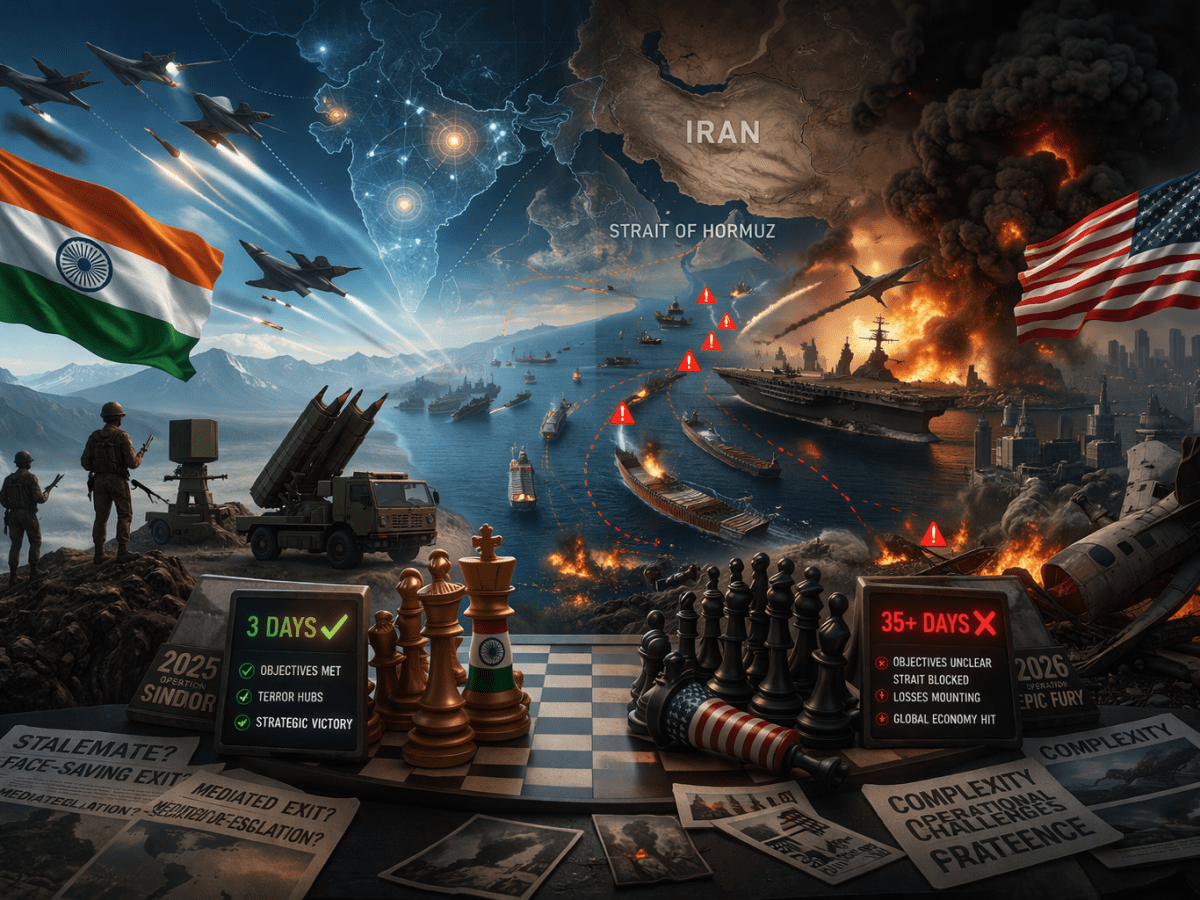
February 28th, 2026 changed the dynamics, the US with its Operation Epic Fury entered the war with direct attacks on Iran. At the same time Israel launched Operation Roaring Lion to primarily crush the proxies like Hamas, Hezbollah and Houthis.
As of April 8, 2026 when the two week ceasefire is announced and the peace talks are being held, Operation Epic Fury is paused and Iran’s attacks are paused but Operation Roaring Lion has transformed into even more brutal Operation Eternal Darkness decimating Hezbollah in Southern Lebanon. Israel launched its biggest ever strike right after the ceasefire was announced.
The “Black Wednesday” Strike: Just as the U.S.-Iran ceasefire was being announced on April 8, Israel launched its largest coordinated strike in history, hitting over 100 Hezbollah command centers in just 10 minutes.
The United States categorically mentioned that Lebanon was not a part of the talks, Pakistan lied to Iran that they were. In fact, Pakistan has somehow helped Israel in getting one of its objectives achieved. Hezbollah is now isolated till these so called “peace talks” continue.
“While the world watches the handshakes in Islamabad, it is ignoring the fire in Beirut. The US is negotiating an exit; Iran is negotiating for its life; but Israel is the only one negotiating with high-explosives. In 2026, peace is for the exhausted—victory is for the relentless.”
These peace talks aren’t negotiations; they are a face-saving exit strategy for a weary Washington and a desperate Tehran.
Israel’s absence from the negotiating table isn’t an oversight—it’s a statement. Unlike the U.S., which is reeling from the staggering cost of regional policing, or Iran, which has been physically and economically dismantled, Israel feels no pressure to “join.”
The U.S. Dilemma: For Washington, these talks are a mechanism to stop the bleeding. Its military bases in the middle east have been hit hard. The Navy hasn’t been able to come any closer to the Strait. The disastrous March rescue mission, which cost nearly $2 billion and saw the loss of six advanced aircraft, effectively killed the American appetite for ground intervention.
The Israeli Logic: Israel’s greatest diplomatic masterstroke was convincing the U.S. that an Iranian threat was an American problem. By aligning interests, Israel successfully leveraged the U.S. military to degrade Iran’s infrastructure and nuclear capabilities. Today, Iran is significantly weaker than it was before the war began on Feb 28, its “Axis of Resistance” is fractured, and the U.S. bore a massive portion of the bill.
Israel has already achieved its kinetic goals. Why sign a treaty that limits your freedom of action when your enemies are already in retreat?
The most profound shift of 2026 isn’t military; it’s diplomatic. The divide between Sunni and Shia states has reached a point of “irreversible polarization.”
Sunni Alignment: States like Saudi Arabia, the UAE, and Jordan now view a nuclear-ambitious, militant Iran as a far greater threat than a stable, tech-heavy Israel.
Pragmatic Peace: For the first time in history, the Sunni world is more aligned with Israeli security interests than with their Shia “brothers” in Tehran. Israel hasn’t just won a war; it has won the neighborhood.
Now based on this perspective, you could decide on your own, who actually won this war.
The Verdict: > Israel has neutralized its immediate threats, secured its regional borders, and fostered a historic (if quiet) alliance with the Sunni world—all while its greatest protector and its greatest enemy are too exhausted to continue. In the brutal mathematics of Middle Eastern geopolitics, that is what winning looks like.
Is the “Grand Bargain” between the U.S. and Iran a genuine step toward stability, or merely a temporary ceasefire while both nations recover from their respective internal collapses?
Also read:
- After Pakistan, Ukraine is the new playground for the US; here is how the future looks like..
- When the Strait of Hormuz Closes, Who Quietly Wins?
- Beyond the Bombing: What Happens After ‘Victory’ is Declared in Iran?
- Trump’s Bravado Took America to War With Iran. One Week Later, the War Isn’t Going as Planned—Only the Narrative Is
- A tale of two conflicts and the hypocrisy!
- The West’s Sick Hypocrisy and Pakistan’s Vile Lies






 Infinite Sea of Opportunities
Leave a comment