
For years, India was described as a balancing power—important but cautious, large but reactive, managing the world rather than shaping it.
That description is now obsolete.
By 2026, India has crossed a strategic threshold that many analysts still underestimate. Without declaring a doctrine, announcing red lines, or issuing ultimatums, New Delhi has executed something far more effective: it has made itself indispensable to the global system.
India is no longer merely navigating geopolitics.
It is quietly structuring it.
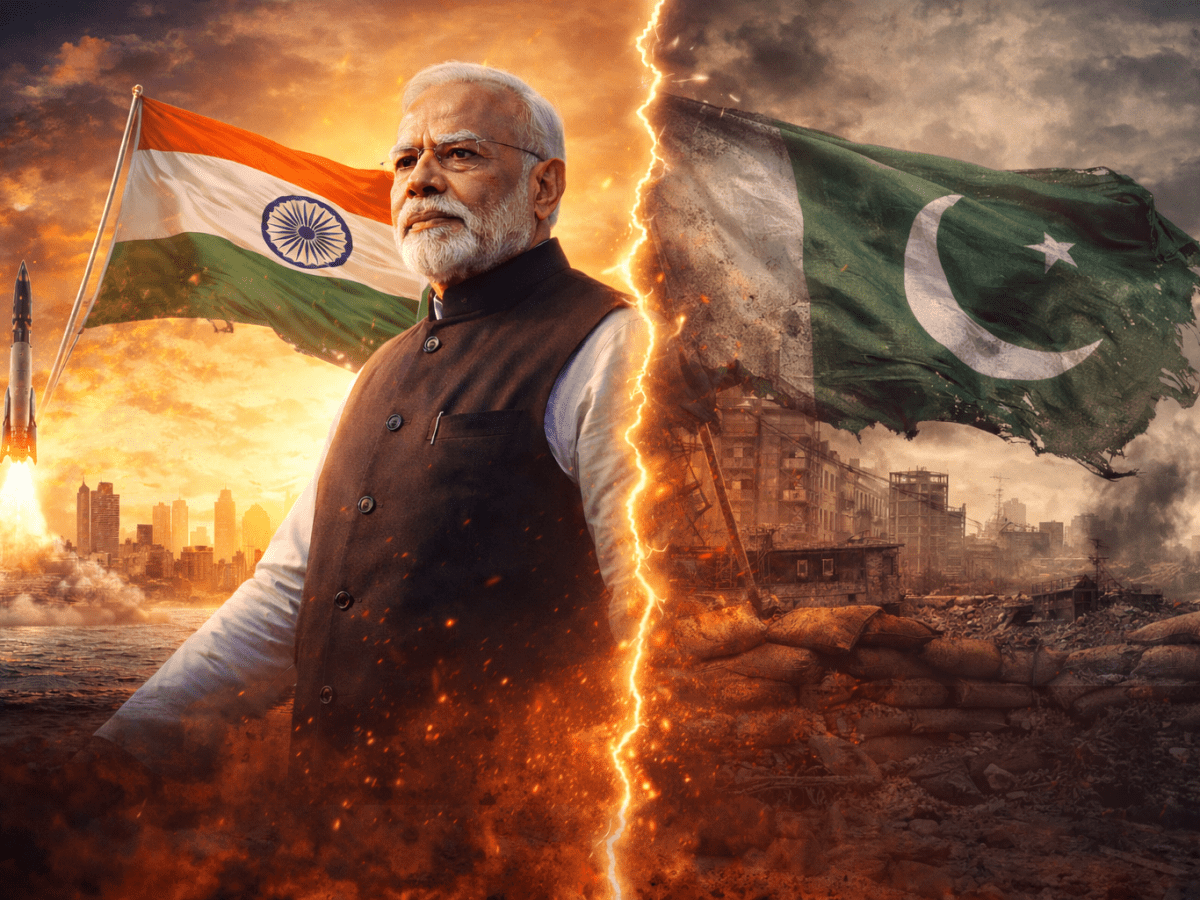
This is India’s Monroe Doctrine—not enforced through ideology or conquest, but through utility.
From Strategic Autonomy to Strategic Confidence
For decades, India’s foreign policy was framed around strategic autonomy. In practice, this often translated into caution: avoiding alliances, limiting escalation, hedging endlessly. The logic made sense during the Cold War and its immediate aftermath.
That phase is over.
India today behaves like a country that understands its leverage. It absorbs criticism, ignores external pressure when necessary, and acts unapologetically in its own interest.
The reason is simple: India now sits inside the world’s most critical supply chains.
Leverage, once earned, changes behavior.
The Pharmacy of the World: When Health Became Geopolitics
India’s modern soft power did not emerge from speeches or summits. It emerged from factories.
During COVID-19, India supplied over 160 million vaccine doses to nearly 100 countries under Vaccine Maitri—at a time when much of the developed world prioritized domestic stockpiling.
This was not charity. It was capacity.
India already produces roughly 20 percent of the world’s generic medicines. The pandemic merely made that reality impossible to ignore. For much of the Global South, India proved itself:
- faster than the West
- cheaper than the West
- more reliable than the West
Health security quietly became geopolitical leverage. Countries dependent on Indian pharmaceutical supply chains no longer see New Delhi as a moral lecturer. They see it as a system stabilizer.
That distinction matters.
Russia, Oil, and the Cold Logic of the Middleman
India’s handling of the Russia–Ukraine war marked a decisive shift.
While Western capitals pushed isolation, India expanded imports of discounted Russian crude. Critics called it immoral. New Delhi called it necessary.
But the real move came downstream.
India refined that oil and exported large volumes of diesel back to Europe—helping mitigate an energy shock while funding its own growth. In effect, India became Europe’s energy shock absorber.
India didn’t choose Moscow over Brussels.
India chose India.
The lesson was blunt: in a fractured global economy, control over processing matters more than control over resources.
The middleman, not the moralist, holds leverage.
Shadow Sanctions: Power Without Proclamation
India’s growing assertiveness is most visible in its neighborhood.
Instead of dramatic sanctions or public ultimatums, New Delhi increasingly uses access as leverage:
access to its economy,
access to its markets,
access to its cultural and institutional ecosystem.
The recent friction involving Bangladesh’s cricket and tournament economics illustrates this shift. No formal sanctions. No public threats. Just consequences.
The message is subtle but unmistakable:
alignment brings benefits; friction brings costs.
This is what mature power looks like—coercion without spectacle.
Redrawing Deterrence Without Crossing the Nuclear Line
India’s military doctrine has evolved just as sharply.
The old distinction between non-state terror groups and their state sponsors has narrowed. India has demonstrated that it can impose costs across borders while controlling escalation.
Operation Sindoor marked this psychological shift. It was not war. It was not prolonged conflict. It was a calibrated strike deep inside hostile territory—and it ended without spiraling.
The signal was clear.
Retaliation no longer automatically equals escalation. Deterrence now rests on credibility, not performative restraint.
That is a dangerous—but stabilizing—threshold to cross.
From Buyer to Supplier: India Enters the Global Arms Market
For decades, India was defined by one label: the world’s largest defense importer.
That image is eroding fast.
India is now a serious defense exporter—selling missiles, drones, artillery systems, and platforms that are battle-tested, affordable, and relatively free of political strings.
This matters far beyond revenue.
Defense exports create long-term dependencies: training pipelines, maintenance contracts, doctrinal alignment, and interoperability. They embed influence quietly and durably.
India is no longer just buying security.
It is co-producing it.
That shift underpins much of its new strategic weight.
Space Power Without the Noise
India’s space program does not posture. It delivers.
The PSLV has become the global workhorse for small and medium satellite launches—reliable, cost-effective, and predictable. For developing countries, space access is not about prestige. It is about communications, navigation, disaster management, and sovereignty.
India offers that access without ideological lectures or geopolitical strings.
In a crowded orbital economy, reliability is influence.
The Indian Ocean: Control Through Presence, Not Provocation
India’s maritime strategy has been methodical rather than theatrical.
More ships. Faster induction. Expanded radar coverage. Strategic access points across the Indian Ocean.
Rather than chasing symbolic dominance, India has focused on surveillance, denial, and persistence—ensuring hostile forces cannot operate freely in its near seas.
This has reinforced India’s role as a net security provider, particularly for smaller island nations that value stability over alignment theater.
Presence, not provocation, is the strategy.
Trade, Europe, and the Power of Optionality
As trade tensions with the United States periodically resurface, India has quietly diversified its economic exposure.
Deeper engagement with the European Union gives India access to a massive market while reducing dependence on American political volatility. The goal is not replacement. It is optionality.
In an era of transactional alliances and tariff politics, flexibility itself becomes power.
This optionality explains why external pressure increasingly fails to move New Delhi.
BRICS 2026 and India as the “Responsible Adult”
As BRICS chair in 2026, India has pursued a notably pragmatic agenda.
Instead of ideological grandstanding, the focus has been on Digital Public Infrastructure—UPI, Aadhaar-linked systems, scalable governance tools that actually function. Moves toward alternative payment architectures signal cautious experimentation with de-dollarization, not reckless rupture.
India positions itself differently from both Washington and Beijing:
less preachy than the West,
less centralized than China.
India is offering systems, not sermons.
The Shield of Utility
So is this India’s Monroe Doctrine?
Not in the classical sense.
India is not declaring spheres of influence or issuing ultimatums. But the underlying logic is familiar.
India has built a country that is:
- too useful to isolate
- too embedded to ignore
- too large to coerce
By controlling critical links in health, energy, defense, space, trade, and digital infrastructure, India has turned utility into leverage.
Like the United States after 1945, India has learned a simple truth:
In a multipolar world, the country that keeps the system running shapes the peace.
And India—quietly—is doing exactly that.
Thanks for reading!
Also read:
- ASAT, ABM and the shifting Nuclear Paradigm
- Operation Sindoor 2025: 3 Economic Proofs of Pakistan’s Strategic Defeat [Analysis]
- A Three-Day War That Shook the War Economy
- ₹79,000 Crore DAC Approvals: How India’s ‘Arms Race’ Is Fuelling Atmanirbhar Growth
- Chandrayaan-3; Modi’s vision vs Nehru’s vision
- Brain Drain, Imports, and 26 Lost Years: Why India Still Lags Behind F-35, Su-57 and J-20




Leave a Reply