Synthesizing the Potential. Engineering the Future…
One blog post at a time.
● Featured Article
-
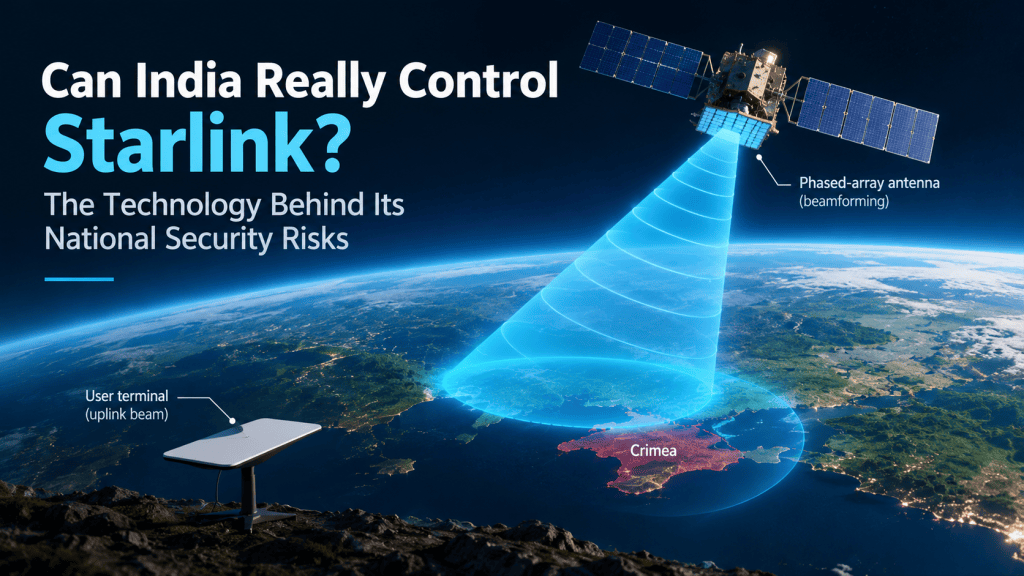
The Russia–Ukraine war has starkly exposed the strategic vulnerabilities that emerge when modern nations rely on private, foreign-controlled satellite constellations for critical national security and military communications. While commercial Low-Earth Orbit (LEO) networks like Starlink proved indispensable in keeping Ukrainian defense forces and civilian infrastructure connected following the systematic destruction of legacy terrestrial communications, the conflict has also demonstrated how operational restrictions—whether driven by corporate terms of service, regulatory compliance, or geopolitical signaling—can directly alter battlefield outcomes. At the center of this debate is a profound systemic risk: What are the long-term technical and strategic implications of allowing a private…
● Latest Articles
-

FPGA vs. CPU: Understanding True Parallelism and the Syntax Trap
Coming from C/C++? Learn why FPGA “programming” is a myth. A Firmware Lead explains the Paradox of Parallelism, the Loop Unrolling secret, and why your…
-

The Career Everyone Missed: FPGA Engineers in the Age of AI
The Great Software Saturation of 2026 Every morning, tech headlines sound the same: “AI writes 80% of enterprise code.”“Junior developer roles vanish as agentic AI…
-

The JF-17 Myth: Is Pakistan’s ‘Thunder’ Just a Social Media Success? (Technical Analysis)
For years, the JF-17 Thunder has been projected as a symbol of technological self-reliance and airpower parity. On paper, it looks modern. On social media,…
-

Rupee Falls to 90: Crisis, Politics, or Economics Explained
As we enter 2026, one number dominates headlines, prime-time debates, and political speeches alike: ₹90 per US Dollar. To some, it signals economic decay.To others,…